
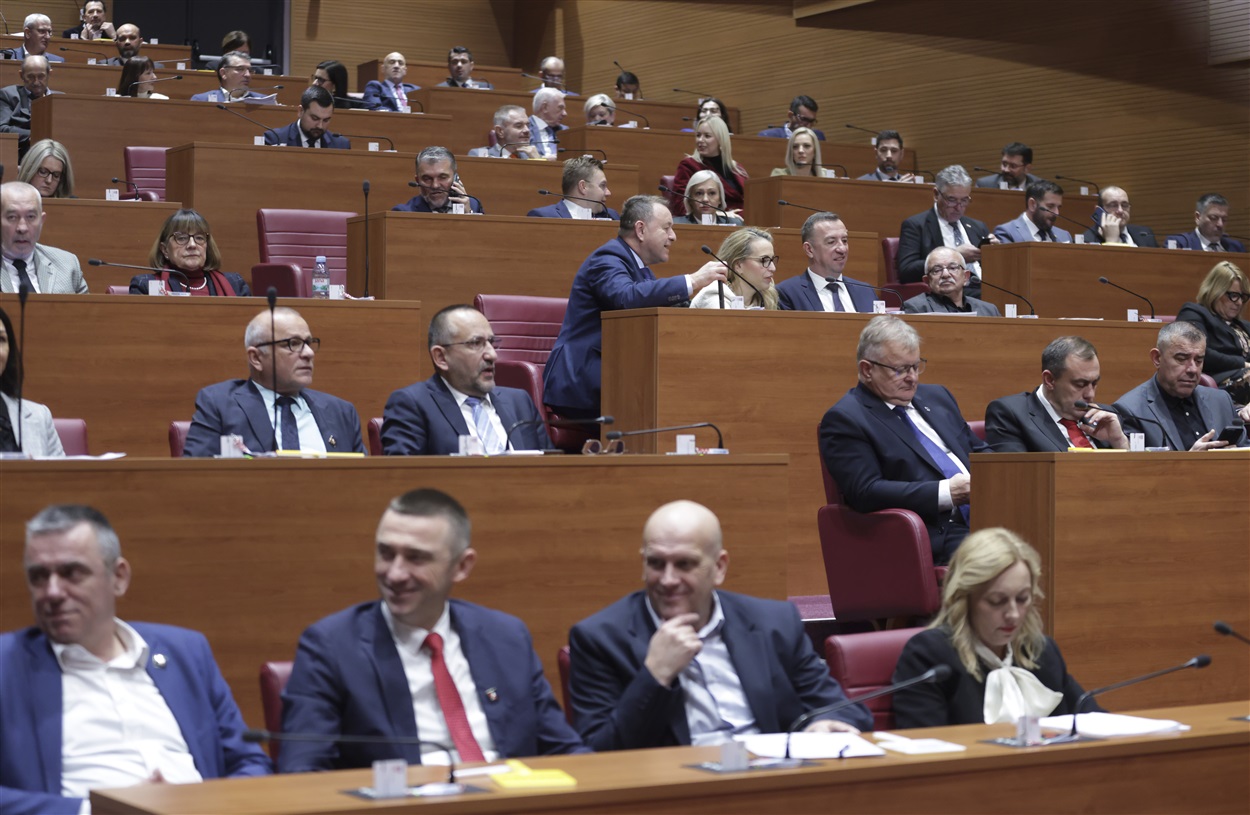
Zagreb - Parliament on Monday adopted under fast-track procedure a law paving the way for the construction of a radioactive waste management centre, providing the regulatory basis for disposing of waste from the Krško nuclear power plant as well as from Croatian hospitals and industry.
The preferred site is Čerkezovac on Trgovska Gora, where a new facility would be built to store radioactive waste from Krško, alongside the refurbishment of existing structures to house waste generated domestically. The law also establishes the planning framework and conditions for construction and enables an environmental impact assessment, a prerequisite for the project to proceed.
Under a bilateral agreement with Slovenia, Croatia is obliged to take responsibility for half of the low- and intermediate-level radioactive waste produced at the Krško plant, which is located in Slovenia and co-owned by the two neighbours.
Lawmakers also passed a new energy efficiency law aligning Croatia with the EU's revised 2023 directive, introducing for the first time the "energy efficiency first" principle in policymaking and in decisions on major investments, including projects worth more than €100 million.
The legislation requires large cities and counties to include annual public-sector energy savings of 1.9%, renovate 3% of the total usable floor area of public buildings, expand the use of renewables, and develop low-temperature district heating and cooling systems. It also envisages the full energy refurbishment of public lighting nationwide by 2035.
Amendments to the electronic communications law were sent to a second parliamentary reading.
A proposal from the opposition We Can! party to tighten restrictions on pyrotechnics, including limiting sales to three days a year and banning their use near hospitals and care homes, failed to secure enough support to pass.