
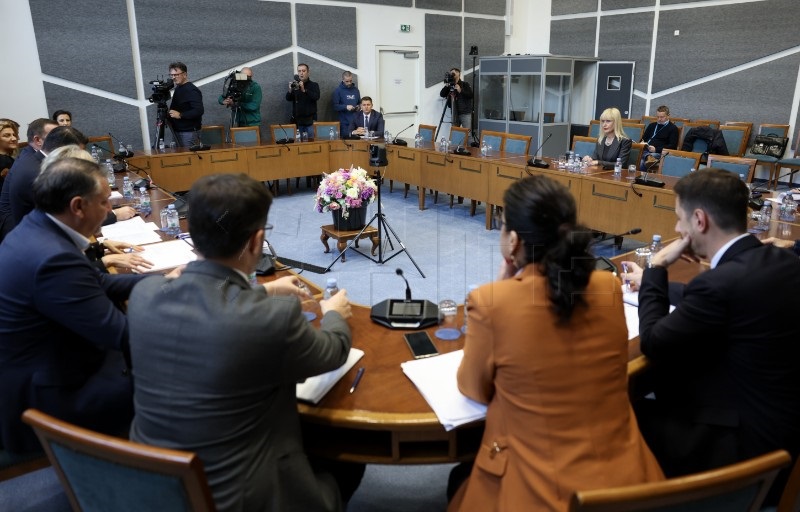
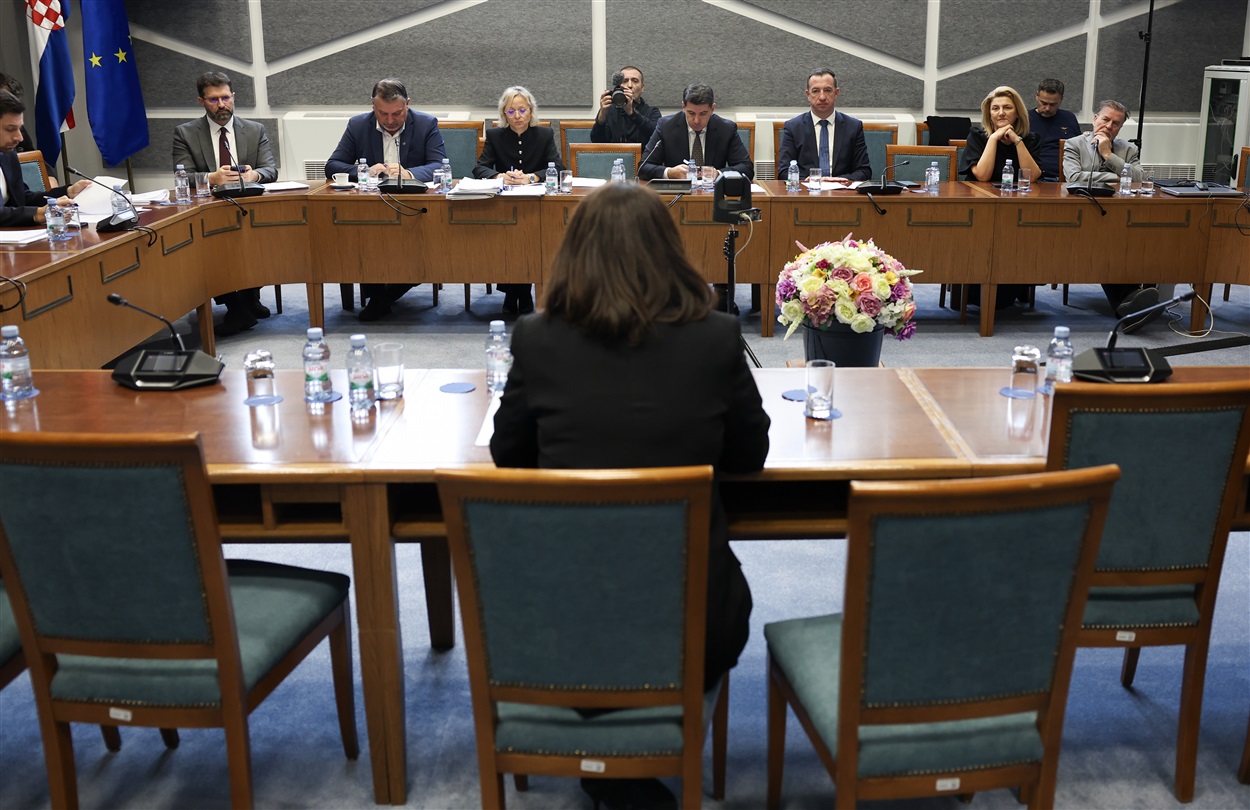
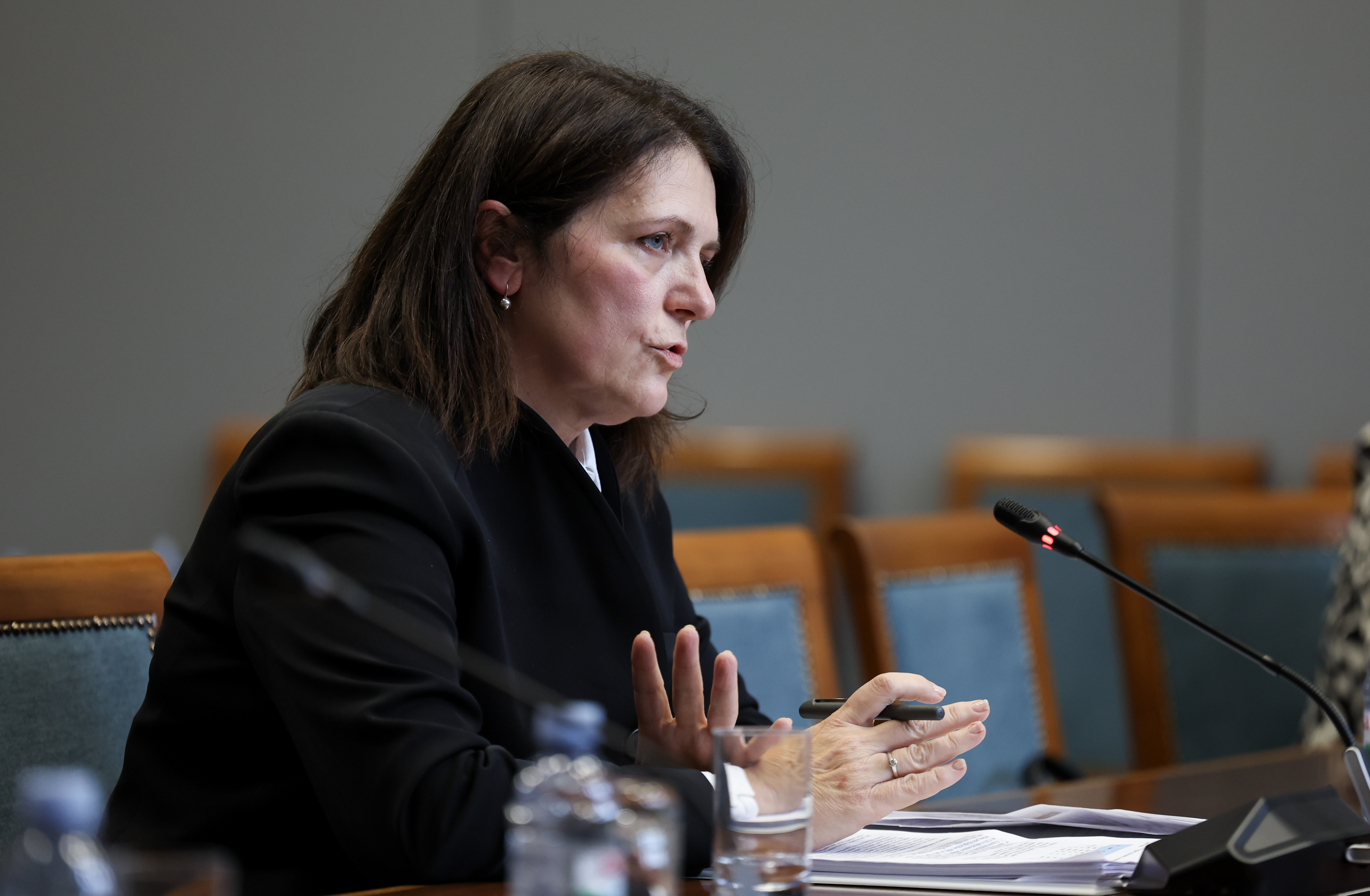
Zagreb - A presidential candidate for the Supreme Court, Mirta Matić, stated on Monday in response to questions from the Parliamentary Judiciary Committee that she has never faced any proceedings against her, neither criminal nor ethical.
At the Judiciary Committee session, which heard all three candidates for President of the Supreme Court, Committee Chairman Nikola Grmoja (Bridge) raised the topic of media reports claiming that Matić, whom President Zoran Milanović had previously highlighted as his main candidate to propose to Parliament, had, as a judge, disclosed information from an investigation concerning her former husband, Tomislav Ricov.
"One portal reported that you informed your former husband’s sister that he was under surveillance. Did you request a correction of that article or file a defamation lawsuit, and is that information true?” Grmoja asked.
Matić responded that she had already publicly denied these claims. “From being a four-year-old witness in a criminal case, I became a defendant without an indictment and a convicted person without a verdict just by applying for this position," she said in an ironic tone, adding that she is still a witness in that case.
Grmoja then asked whether she had a mobile phone registered to her former husband’s company, whether she had spoken with his sister about his being under surveillance, and whether she had discussed the matter with Zoran Bajić. “All answers are part of the case; I cannot respond to these questions in this manner,” Matić stated.
In response to SDP’s Mišel Jakšić, she emphasised that no proceedings, neither criminal nor ethical, have ever been conducted against her. “There is nothing immoral or unethical in my entire life,” she asserted.
HDZ’s Ante Babić asked how she would handle situations involving a personal conflict of interest and whether there was any professional situation in which she would act differently today. "I would handle such situations as I have for the past 17 years -- if it involves someone close to me, I would request to be recused. Would I act differently? No, I would proceed exactly the same way in a professional sense," she said.
Introducing her programme, Matić stated that she has served as a judge at the High Commercial Court for the past 14 years, and prior to that, she spent 11 years as a judge at the Commercial Court in Zagreb.
"I have never been a president or deputy president of a court, but managing cases to reduce backlogs and accelerate judicial proceedings since 2015 is something I have experience in," she said in response to Jakšić’s question about her experience in court administration.
She identified three key problems: excessively long proceedings, a high number of unsolved cases, and inconsistent case law, all of which directly affect citizens’ trust in the judiciary.
“According to the 2024 report, in terms of the number of unsolved cases, the Supreme Court has made significant progress over the past four years, and some judges from lower courts were temporarily assigned to assist, which has proven to be an effective measure. However, during this period, the Supreme Court has largely neglected and overlooked its primary role, which is to ensure the uniformity of case law,” she stated.
Maganić warns of poor public perception of judicial independence
Aleksandra Maganić, a professor of civil procedural law at the Faculty of Law in Zagreb, warned about the rather poor public perception of judicial independence, with only 28 percent of citizens considering the judiciary independent. By contrast, in neighbouring Slovenia, which has a similar judicial system, as many as 55 percent of citizens regard it as independent.
This candidate considers legal uncertainty experienced by citizens to be a major problem and emphasises that they should have the legal protection they expect, because if it takes five, six, or seven years to obtain, it is clear they will be dissatisfied.
"At the centre of court decision-making must be the problem that the person faces, and judges should be encouraged. There needs to be greater seriousness regarding accountability, and abuses must be prevented," she said while presenting her work programme.
Savić: Supreme Court’s main task is to ensure uniform case law
Zagreb lawyer Šime Savić, presenting his programme, stated that the Supreme Court’s main task is to ensure uniform case law, noting that “we currently have three different decisions on the same matter.” For this reason, he believes that citizens have the least trust in the judiciary compared to other institutions.
“What kind of justice is it when a case takes 20 years and then we conclude that it has expired due to the statute of limitations? We have the Mamić case from Osijek, which caused enormous damage to the judiciary, not to mention that several judges ended up in prison,” he said. Savić emphasised that judges should uphold the court’s reputation not only in the courtroom but also in public, even in a tavern.
He noted that it is problematic for judges to align with particular political positions or participate in certain public events. This candidate for head of the Supreme Court also advocated for salary increases across the system, from court clerks to judges.
At the end of the four-hour session, Grmoja reported that a classified letter from USKOK regarding Matić and her former husband is held in the parliamentary safe, and that any MP can request access to review it in order to have all the information before voting on the new head of the Supreme Court. Today, the Committee, following an HDZ proposal, did not vote on any candidate; the vote will take place later, but without a defined deadline.