
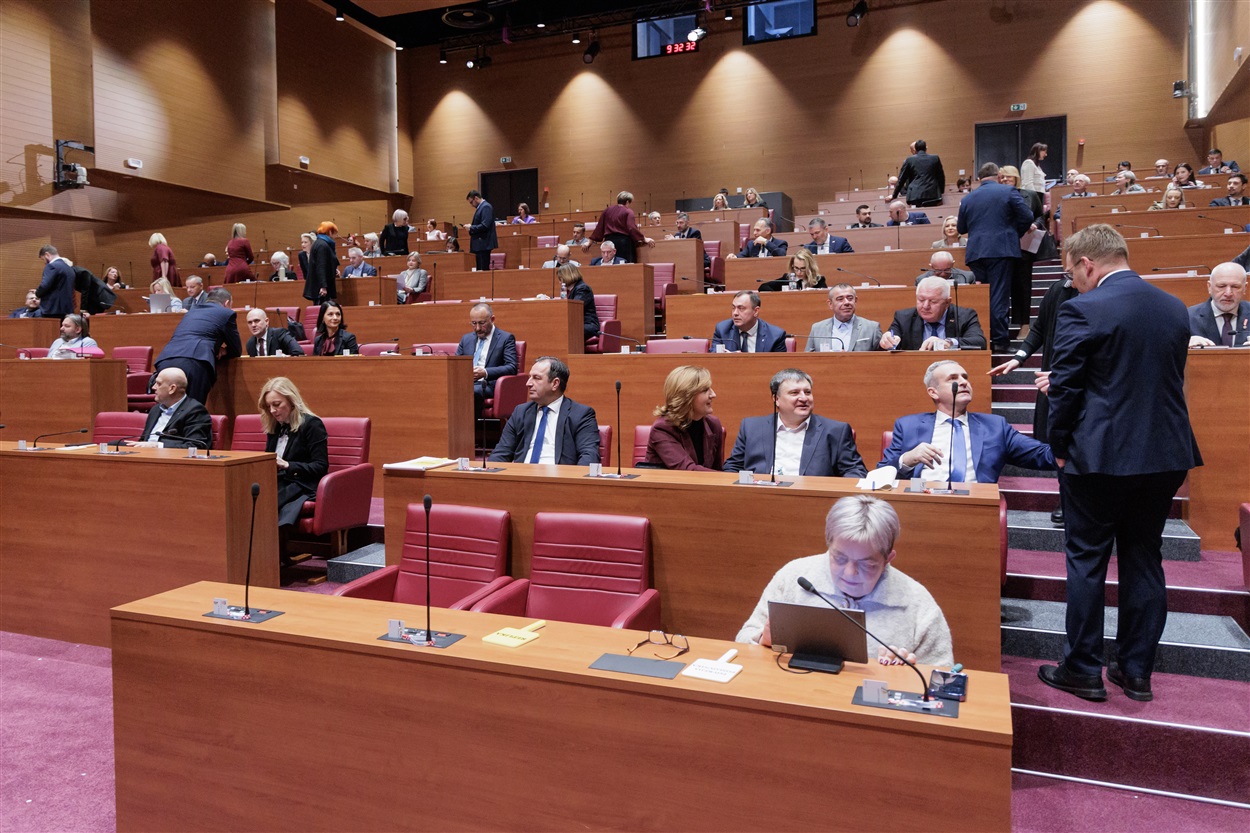
Zagreb - Regional Development and EU Funds Minister Nataša Mikuš Žigman said in Parliament on Wednesday that balanced regional development remains a government priority, highlighting over €2 billion invested through EU mechanisms and citing rising GDP across all Croatian regions since 2016.
She noted GDP growth since 2016 of 22% in Pannonian Croatia, 42.5% in Adriatic Croatia and 53.3% in Northern Croatia, with the overall EU development index rising from 61% to 78% by 2024.
The minister said the new Regional Development Act aims to strengthen multi-level dialogue and partnerships with municipalities, cities and counties. It establishes advisory councils for Slavonia, Baranja and Srijem, the North, Central Croatia and the Adriatic region.
Regional coordinators will provide technical support, backed by €7.5 million annually from the budget.
Urban areas, home to 70% of the population, will see targeted policies on waste management, ecology, climate and demographics, while support is also focused on mountainous, assisted, island and border areas. Units hosting protected natural areas will receive financial compensation if relevant public institutions earn net revenues exceeding €5 million annually.
Opposition MPs criticised the law as centralising, leaving local authorities dependent on the prime minister and government.
Miro Bulj (Bridge) said Dalmatian hinterland was overlooked, while Dalibor Paus (IDS) warned regional units would lack real influence over funding. Rada Borić (We Can!) and Marijana Puljak (Centre) argued for decentralisation, while Anka Mrak Taritaš (GLAS) warned that having councils chaired by the prime minister could lead to arbitrary decision-making,
Mikuš Žigman defended the law, stressing that the development index is only one tool for EU project applications and that all local units can access funding sources.
HDZ MPs Krešimir Ačkar and Stipan Šašlin highlighted support for assisted, border, mountainous and rural areas and islands, and noted over 165,000 projects worth more than €5 billion launched under the Slavonia, Baranja and Srijem programme since 2016. Tomislav Klarić (HDZ) praised the retention of tax relief in Vukovar despite its move to a higher development group.