
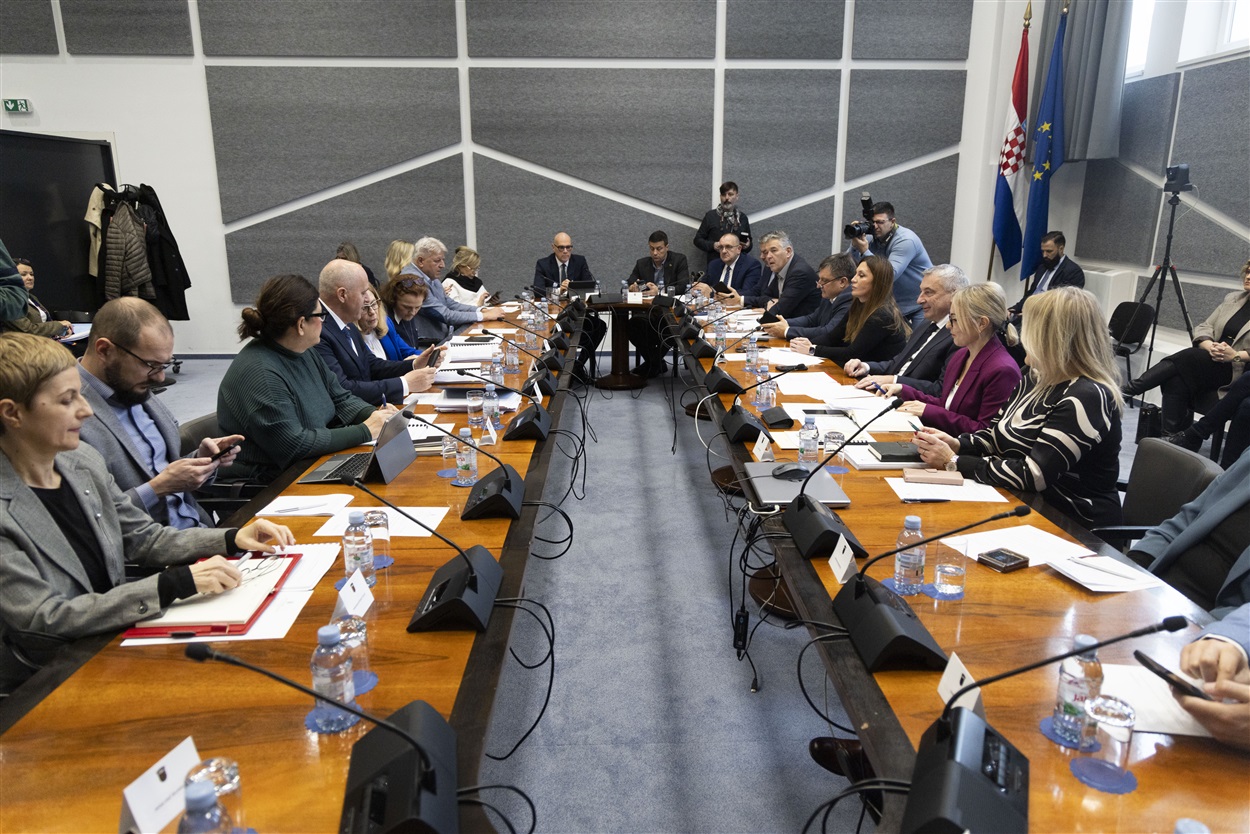
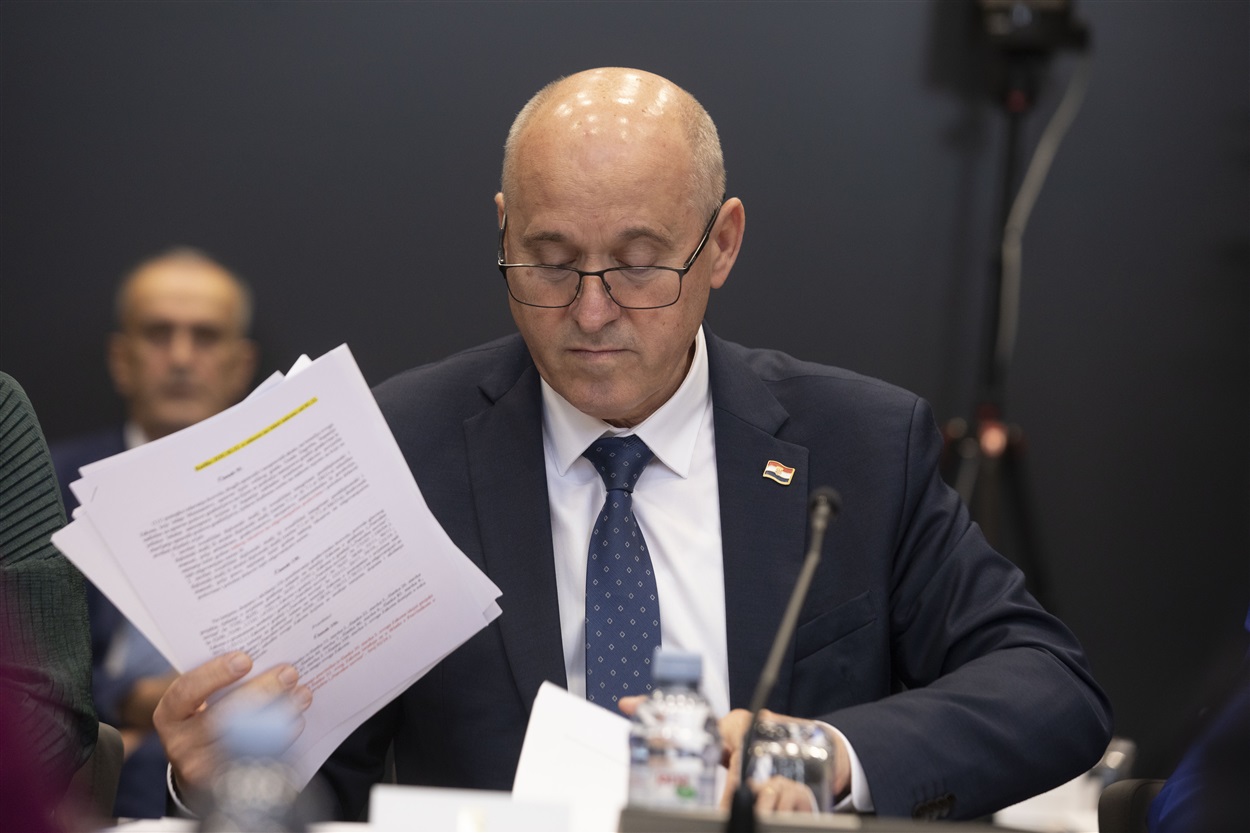
Zagreb - The parliamentary Committee on Physical Planning on Tuesday adopted, by majority vote, a package of three construction and spatial planning bills, while the opposition once again demanded that the bills be withdrawn from procedure, or at least sent to a third reading.
The bills should be withdrawn from procedure or at least sent to a third reading. This concerns the future of our country; there is no rush, and nothing will happen if we postpone their adoption for a few months in order to align them with the objections raised by experts and adopt them in the interest of all citizens, said MPs from the SDP, Centre, We Can! and independent MP Marija Selak Raspudić, speaking about the bills on spatial planning, construction, and energy efficiency in buildings, which are going to receive a second reading.
The opposition criticised the Ministry of Physical Planning, Construction and State Assets for not sending the final drafts of the laws -- particularly the Physical Planning Bill, which became the focus of the debate -- back to public consultation after the first reading, and for amending the bills only "cosmetically" rather than substantively after the first reading.
That nothing significant has changed strategically since the first reading was confirmed by Minister Branko Bačić, who said that postponing adoption by a few months would not change anything, as the bills would remain the same.
Bačić: Either we adopt this bill or the land will be ruined
"The Physical Planning Bill may not be perfect, but compared with the existing one it drastically raises the bar in terms of protecting space as a public good. Nothing significant would change if we adopted it later, because the law will not change -- we are convinced that we are protecting space far better than we are now. This is the political position of this government: either we adopt this bill, or the current one remains in place, and it will destroy Croatian space," the minister stated.
He added that the bills need to be adopted because, as of 1 January, a new system of digital spatial planning will come into force, under which spatial plans will be standardised throughout Croatia.
"At the proposal of the Croatian Chamber of Architects, we are developing an urban and architectural tender and providing local authorities with a new tool. We are also introducing the urban development project as a new planning instrument which brings together three processes -- environmental protection procedures, the development of an urban development plan, and the issuing of a location permit -- all in one place, which will drastically speed up procedures," he said.
A bill written for citizens, not interest groups
Responding to criticism that the bill favours big business, Bačić emphasised that every article of the bill is written for Croatian citizens, not for interest groups.
"Yes, it is written for investors who build family houses. As for affordable housing, there are no private investors involved -- such housing is built solely by public investors: the state through APN, and local authorities through their public institutions," he said.
He dismissed claims that construction would be permitted on non-building land, stressing that this will be exceptionally allowed only for public investors in affordable housing. "If the state or a local authority has to buy land, then forget about affordable housing," he added.
With regard to urban land consolidation -- the most controversial issue -- the opposition warned that majority owners holding 50 per cent plus one of the land area and private investors can still carry it out, while the minister insisted that consolidation cannot take place unless it is specified in the local authority’s urban development plan in cases involving private owners.
"Only a public institution -- a municipality, town or county -- can propose consolidation through an urban development project," he said.
SDP to Bačić: You will go down in history as the minister who protected spatial devastation
“Even HAZU (the Croatian Academy of Science and Art), an institution that almost never reacts to anything that could lead to a potential conflict with HDZ, opposes this bill,” said SDP’s Denis Kralj.
The minister announced that, following today’s meeting with representatives of HAZU and the Academy of Architectural Art and Science, he will accept amendments that will ensure that the development of architectural policies and guidelines for spatial planning is coordinated with the profession.
We Can! says will initiate a constitutional review of Physical Planning Bill
"The Constitution guarantees citizens the right to local self-government. Local self-government plans and determines the use of space; investors are there to build what the public authorities have planned, not the other way around. An investor cannot decide what will be built in a given area, and if the provision remains that the ministry must accommodate such demands within three years because the local authority could not or would not draw up an urban development plan, then we will initiate a constitutional review," said the head of the We Can! parliamentary group, Sandra Benčić.
They are not opposed to urban land consolidation, We Can! stressed, but only if it is carried out following the model of Slovenia, Germany or Austria -- at the initiative of public authorities or when all property owners agree, not merely 51 per cent.
On Wednesday, the Sabor will debate the three construction and spatial planning bills which have met with strong criticism from the parliamentary opposition as well as a response from the Croatian Academy of Sciences and Arts (HAZU).