
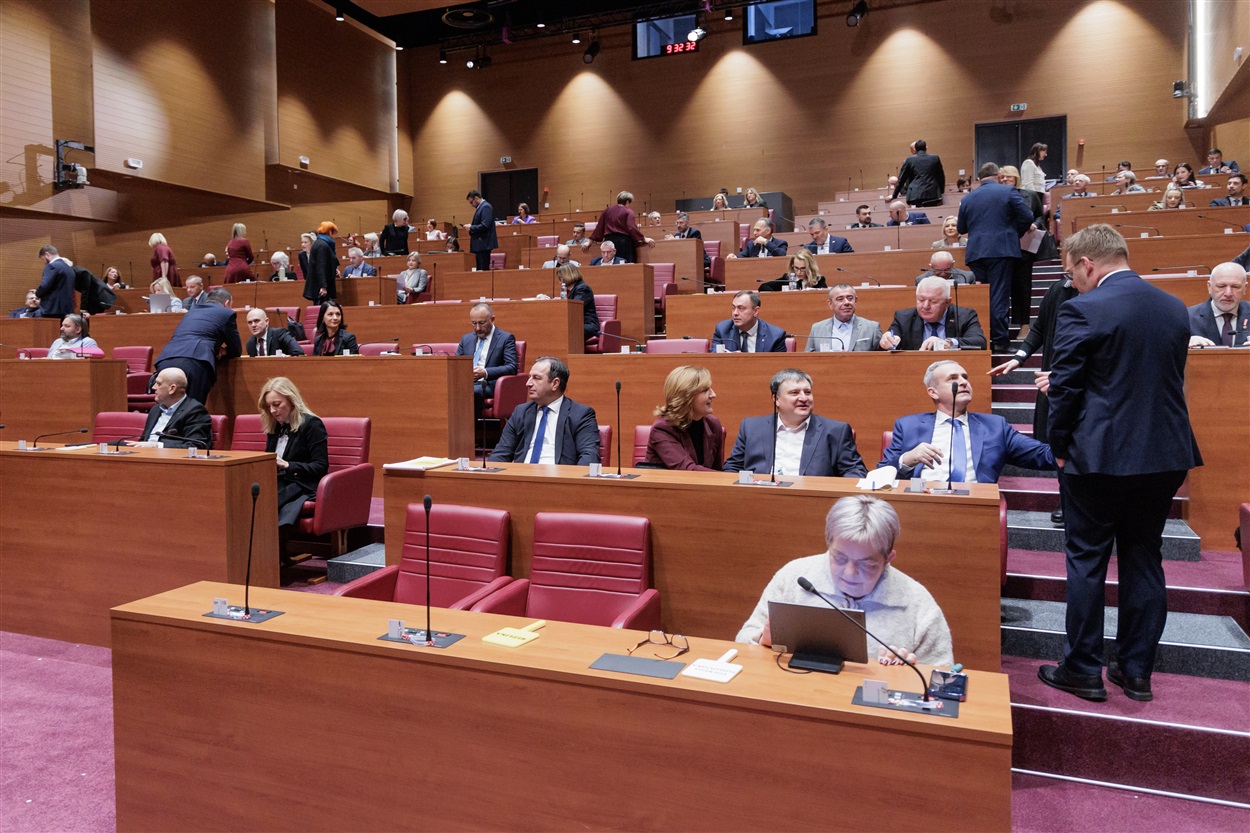
Zagreb - Croatia had 3,595,385 registered voters on 30 September, around 6,000 fewer than at the end of March, State Secretary at the Ministry of Justice, Public Administration and Digital Transformation Sanjin Rukavina told parliament on Thursday.
The ministry submits voter register figures and constituency breakdowns to parliament twice a year. All constituencies were within the legally permitted deviation of 5% from the national average of 359,539 voters. The largest deviations were recorded in the fifth constituency (-3.42%) and the ninth (+2.91%).
The opposition SDP said it would not support the report, with MP Arsen Bauk arguing that formal requirements had been met but that equal voting rights across the country had not been ensured. He called on the Constitutional Court to assess the impact of the 2023 changes to constituency boundaries.
Bridge MP Ivan Matić questioned how many registered voters actually lived at their declared addresses, particularly given that constituency boundaries were based on registered voters rather than actual population figures.
Homeland Movement MP Tomislav Josić also questioned the reliability of voter records, citing discrepancies between population, voter and residence registration figures in Vukovar.
Rukavina responded that residence registration was the responsibility of the Ministry of the Interior, while population censuses were statistical surveys conducted every ten years and could not be directly compared with the voter register.
HDZ MP Nevenko Barbarić, meanwhile, raised concerns about the voting rights of around three million voters in the 11th constituency, which represents Croatians living abroad. He criticised advance registration requirements, limited voting locations at diplomatic missions and the cap of three parliamentary seats for the diaspora.