
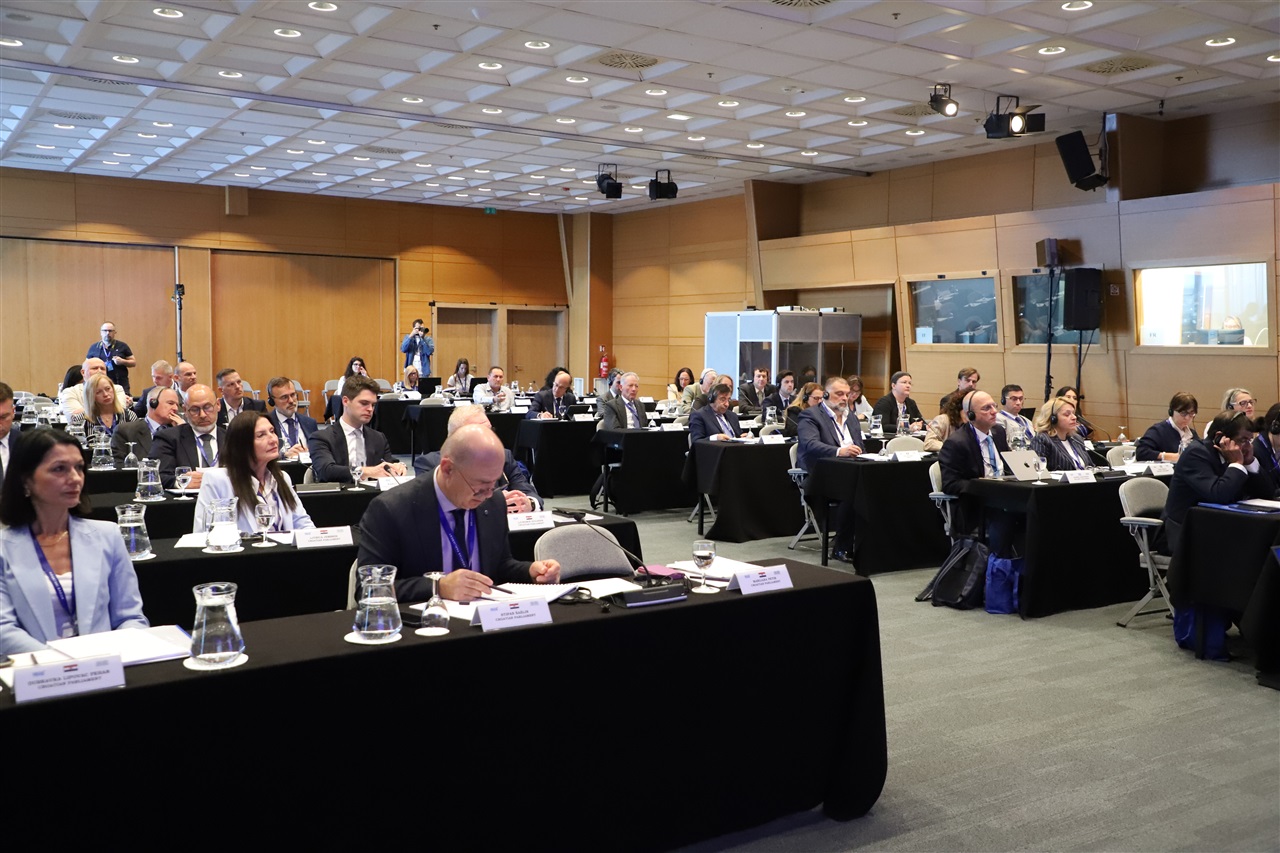
Dubrovnik – The Interparliamentary Conference “From field to sea – A common vision for EU food security and strategic autonomy”, organised by the Agriculture Committee of the Croatian Parliament as part of the parliamentary dimension of the Republic of Croatia’s Presidency of the EU MED9, is currently taking place in Dubrovnik.
The first panel of the conference focused on Mediterranean agriculture and the Common Agricultural Policy post-2027, with the future financing of the CAP, generational renewal, climate change and the specific challenges faced by Mediterranean countries at the centre of the discussion.
Zdravko Tušek, State Secretary at the Ministry of Agriculture, Forestry and Fisheries, stressed that Croatia advocates maintaining a strong European agricultural policy, supported by adequate funding, simpler rules and greater legal certainty for farmers and fishers.
He placed particular emphasis on the need for generational renewal and easier access for young farmers to land, capital, housing and infrastructure. He also warned of the increasingly pronounced effects of climate change, noting that drought-related damage in Croatia in 2026 had reached EUR 224.5 million.
Diego Canga Fano, a representative of the European Commission’s Directorate-General for Agriculture and Rural Development, stressed that the future CAP must remain one of the key instruments for food security and the resilience of rural areas. Speaking about the new Multiannual Financial Framework for the period 2028–2034, he underlined the need for stronger links between agriculture and investment in rural infrastructure, education, innovation, transport and digital connectivity.
The European Commission is expected to provide Member States with recommendations for the preparation of national and regional partnership plans by the end of 2026, while consultations should be completed during the second quarter of 2027, so that the new system can begin to be implemented in January 2028.
Karlo Ressler, Member of the European Parliament and rapporteur for national and regional partnership plans, stressed that negotiations on the EU budget post-2027 would be crucial for the future of European agriculture. He underlined the importance of protecting direct payments, ensuring stable CAP funding and providing stronger support for young farmers, as well as investing in irrigation and water management.
Aindrias Moynihan, Chair of the Joint Agriculture and Food Committee of the Irish Parliament, presented the priorities of Ireland’s Presidency of the Council of the European Union, including food supply security, competitiveness, the preservation of rural and coastal communities, and the sustainability of agriculture and fisheries.
Speaking about the future CAP, he raised concerns about a possible reduction in funding of between 20 and 24 per cent, as well as issues related to the new funding structure, support for young farmers and the financing of LEADER programmes.
The discussion highlighted that the future CAP must retain stable and predictable funding and respond more effectively to the specific needs of Mediterranean and island areas, particularly with regard to drought, water scarcity, extreme temperatures and soil degradation.
Participants concluded that food security is now a strategic issue of European security and resilience and that the MED9 countries should jointly advocate a strong CAP, investment in irrigation and water resource management, increased domestic production and processing, and the preservation of small farms.
The second panel of the conference, focusing on fisheries and the future of the Mediterranean fisheries sector, is currently underway.