
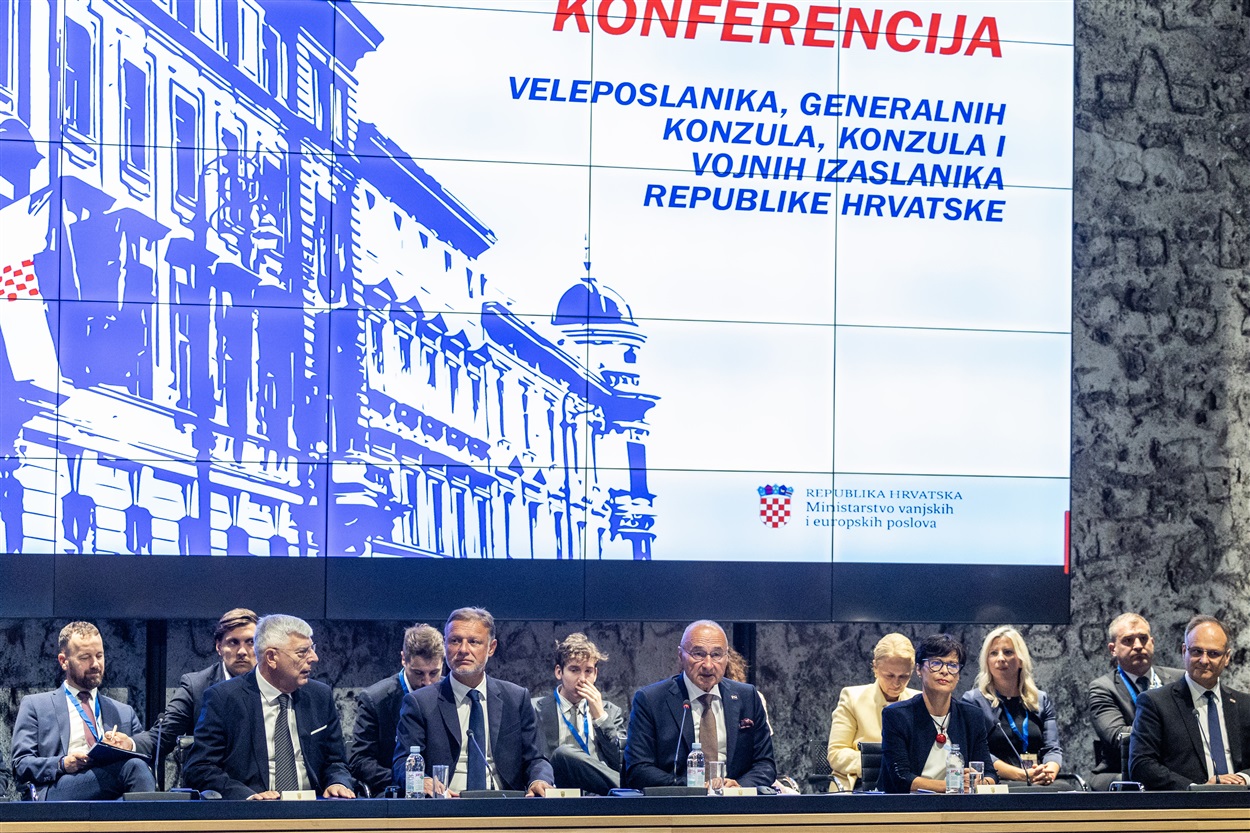
Zagreb - Europe must strengthen its security and NATO's European pillar as the international order is changing, Croatian Parliament Speaker Gordan Jandroković said on Tuesday at a conference of Croatian ambassadors, consuls and military attachés, warning that Serbia is acquiring offensive weapons.
"Croatia will continue to advocate multilateralism, international law and the international order, but it must be aware of the changes and have answers to them," Jandroković said.
He stressed the importance of strengthening NATO's European pillar, saying Europe had spent decades feeling that America would always stand behind it, causing European countries to neglect their own security.
He also addressed EU enlargement, saying it was in Croatia's interest for countries in its southeastern neighbourhood to gradually move towards EU membership based on their progress.
At the same time, Croatia must speak clearly about developments in its neighbourhood and warn of potential security risks, he said.
"Serbia is arming itself not only with defensive weapons, but also with offensive weapons. That needs to be pointed out to our Western allies," Jandroković said.
He added that Croatia must explain developments in the region to Western countries, as "new political elites often do not understand the former Yugoslav space or remember the Greater Serbian policies of Slobodan Milošević and the breakup of the former state."
Record year for EU enlargement progress
European Commissioner for Neighbourhood and Enlargement Marta Kos said enlargement had once again taken on the role of a European geopolitical stabiliser.
She said 2026 was a record year for progress on EU enlargement, with more negotiating chapters opened and closed in the first eight months than in any year over the past 25 years.
Montenegro has closed more than half of its negotiating chapters and could join the EU in 2028, she said. Albania has begun closing chapters, while Ukraine and Moldova have made significant technical progress, she said.
Kos added that Iceland would decide later this week whether to resume accession negotiations.
She warned that the EU must learn from the 2004 enlargement and introduce mechanisms to ensure that new members continue to uphold the rule of law and the bloc's fundamental values after joining.
The EU can no longer afford to wait for candidates to spend decades in the accession process, she said, adding that it should develop more ambitious forms of gradual integration.
Grlić Radman: Strategic environment has changed significantly
Foreign and European Affairs Minister Gordan Grlić Radman said the conference aimed to provide diplomatic representatives with guidance for their future work and facilitate the exchange of information and views based on their experience and discussions.
He said the situation and strategic environment had changed significantly over the past year.
"Nothing is the same anymore," Grlić Radman said, citing the continuation of Russia's aggression against Ukraine, the situation in the Middle East, the closure of the Plješivica tunnel and crisis management among the conference's key topics.