
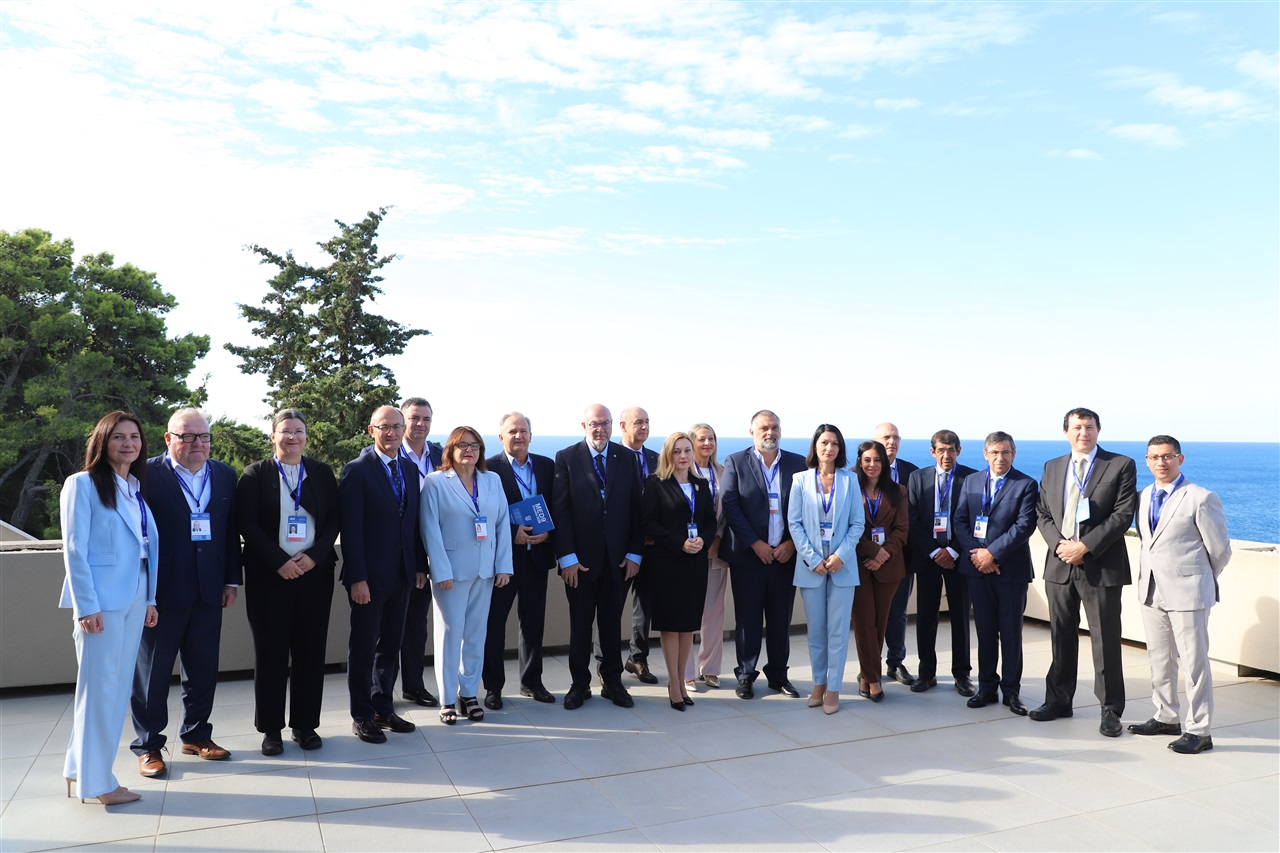
Dubrovnik – The Interparliamentary Conference “From field to sea – A common vision for EU food security and strategic autonomy”, organised by the Agriculture Committee of the Croatian Parliament, was opened in Dubrovnik.
The conference brought together members of the committees on agriculture and related sectors of the national parliaments of the MED9 countries, members of the Irish Parliament, representing the EU Member State currently holding the Presidency of the Council of the European Union, Members of the European Parliament, representatives of the European Commission, representatives of the European farmers’ and agricultural cooperatives’ organisation Copa-Cogeca, as well as representatives of institutions, chambers, associations and organisations in the fields of agriculture, fisheries, forestry and veterinary medicine, and representatives of academia.
The conference was opened by Marijana Petir, Chair of the Agriculture Committee of the Croatian Parliament and envoy of the Speaker of the Croatian Parliament, Gordan Jandroković. She stressed that the conference was being held at an important moment for discussions on the future of European agricultural and fisheries policies, as decisions are being taken on their future shape and financing post-2027.
Petir presented the three interrelated topics of the Conference: the future of the Common Agricultural Policy post-2027; the competitiveness of Mediterranean fisheries and the vitality of island and coastal communities; and food security as an issue of national and European security and resilience.
She pointed out that wars, geopolitical disruptions, unstable supply and energy chains, and the effects of climate change are fundamentally changing the conditions under which food is produced. Mediterranean countries face additional challenges, including water scarcity and drought, soil degradation and desertification, wildfires, rising temperatures and increasingly frequent extreme weather events.
For this reason, Petir stressed, there is a need to better recognise the specific characteristics of the Mediterranean and enable targeted solutions for water management, climate change adaptation and the preservation of productive capacity.
Speaking about the future of the Common Agricultural Policy, she also drew attention to the issues raised by the new approach to financing and implementing European policies post-2027. The pooling of funds and greater flexibility for Member States must not lead to wider disparities in support for farmers or to unequal conditions in the European Single Market.
She stressed the need for clear safeguards and stable and predictable financing that would enable farmers to plan their production and investments over the long term.
She paid particular attention to the role of farmers and fishers as the pillars of food security.
“Food security and the strategic autonomy of the European Union cannot be built without farmers and fishers. They can only be built with them,” Petir said.
She stressed that policies concerning agriculture and fisheries must be clear, less administratively burdensome, financially stable and predictable, and developed with the genuine participation of producers, following a bottom-up approach.Speaking about fisheries, she stressed that fishers are not merely economic operators, but also produce food, sustain island and coastal communities and represent an important part of the Mediterranean identity. Sustainable management of marine resources must therefore encompass not only the environmental dimension, but also the economic, social and market dimensions of fisheries.
She placed particular emphasis on generational renewal, stressing that without creating conditions in which young people can earn a decent living from agriculture and fisheries, it will not be possible in the long term to preserve food production or the vitality of rural, island and coastal areas.
Petir expressed the expectation that the discussions at the Conference would result in a concrete contribution and clear common messages to the European institutions, at precisely the moment when the future Common Agricultural Policy and Common Fisheries Policy are being shaped and decisions are being taken on their financing post-2027.
“When we talk about the future of agriculture and fisheries, we are talking about much more than two economic sectors. We are talking about the people who produce our food, about life in our rural, island and coastal areas, about food security, and about Europe’s security, resilience and strategic autonomy,” Petir concluded, before declaring the Conference open.
The participants were then addressed by Zdenko Lucić, State Secretary at the Ministry of Foreign and European Affairs, who presented the priorities of Croatia’s first Presidency of the MED9 – a safer, more sustainable and more resilient Mediterranean – and stressed the need for a common European and international response to challenges that exceed the capacities of individual countries.
He highlighted in particular the Rome Coalition for Fertiliser Access and Food Supply Security, launched by the Croatian and Italian foreign ministers under the Croatian MED9 Presidency, as an example of a concrete response to the need to strengthen the security and resilience of the Mediterranean.
Speaking about the global dimension of food security, Lucić stressed the importance of linking humanitarian assistance with long-term development, as well as Croatia’s commitment to multilateral cooperation through its partnership with the WFP and FAO and its membership of IFAD.
He also highlighted the Mediterranean as a space for cooperation between Europe, Africa and the Middle East in the areas of agriculture, water resources management, fisheries, technology and resilient food chains. The Conference continues with three panel discussions focusing on the future of the Common Agricultural Policy post-2027; the competitiveness of Mediterranean fisheries and the vitality of island and coastal communities; and food security as a concept of national security and resilience.
On the margins of the Conference, the Agriculture Committee of the Croatian Parliament held a meeting with the Croatian Chamber of Agriculture and Croatian Members of the European Parliament, focusing on the future Multiannual Financial Framework, the Common Agricultural Policy post-2027 and the priorities of Croatian farmers.
The MED9 group brings together nine southern EU Member States: Croatia, Cyprus, France, Greece, Italy, Malta, Portugal, Slovenia and Spain. Croatia joined the group in 2021 and, in 2026 is chairing the MED9 for the first time, with priorities focused on a safer, more sustainable and more resilient Mediterranean.