
Zagreb - Full equality between women and men may take at least another 130 years at the current pace of progress, Croatia's Gender Equality Ombudswoman Višnja Ljubičić said on International Women's Day.
Despite a stronger legal framework, positive developments and the highest level of gender equality ever achieved in Croatia and Europe, a number of worrying trends require systematic action by key actors at all levels, Ljubičić said in a message marking the day.
Violence against women
She highlighted violence against women as a particular concern. European studies show that one in three women experiences some form of physical or sexual violence during her lifetime, while many are also exposed to psychological, economic or digital abuse.
A large number of cases remain unreported, underlining the need to strengthen victim protection and violence prevention systems, she said.
Croatia has in recent years recorded a significant number of murders of women, or femicides, as well as a rising trend in reports of various forms of sexual harassment and violence. The most serious forms of violence against women are still most often committed by those closest to them -- husbands, partners, former husbands and partners, and sometimes sons.
Women and work
Women make up 47% of Croatia's workforce and, although they have a higher level of education, they are still paid less than men and remain underrepresented in leadership positions. Women hold fewer than 30% of managerial posts, and their share on the boards of large companies is even lower, especially in STEM fields.
According to the 2025 Gender Equality Index of the European Institute for Gender Equality (EIGE), women must work 15 and a half months to earn what men earn in a year. Croatia scored 57.1 points in the 2025 index, ranking 21st in the European Union.
Political participation
Women also remain underrepresented in political and public decision-making. Although research shows that greater female representation improves the quality and inclusiveness of decisions, in many representative bodies women account for less than 40%.
Croatia's government has four female ministers, or 22% of cabinet posts, while the picture is more favourable in parliament, where women hold about one third of seats.
Globally, women make up only about 27% of national parliament members, while the European average is 31.8%, placing Croatia above the European average. The current Croatian parliament also has a record number of female MPs.
Ljubičić noted that the United Nations has long warned that progress towards gender equality is too slow and that, at the current pace, it could take more than 130 years to achieve full equality between women and men.
Women inventors and pioneers
Marking International Women's Day, the Croatian Bureau of Statistics (DZS) published an article titled "What Would the World Be Without Women?", highlighting lesser-known women whose inventions and achievements changed the world.
These include 18th-century mathematician Maria Gaetana Agnesi, the first woman to write a mathematics book, Josephine Cochrane, inventor of the dishwasher, Florence Parpart, credited with inventing the electric refrigerator, Mary Phelps Jacob, inventor of the bra, and Amelia Earhart, the first woman to fly across the Atlantic.
According to many sources, the first beer was brewed by women in ancient Mesopotamia.
According to a 2024 population estimate, women account for 51.3% of Croatia's population and their life expectancy is 81.9 years, the DZS said.
"Ring the Bell for Gender Equality" and night march
As part of the global "Ring the Bell for Gender Equality" initiative, stock exchanges around the world will symbolically open trading by ringing a bell to raise awareness of gender equality. The Zagreb Stock Exchange will join the initiative on Monday, 9 March.
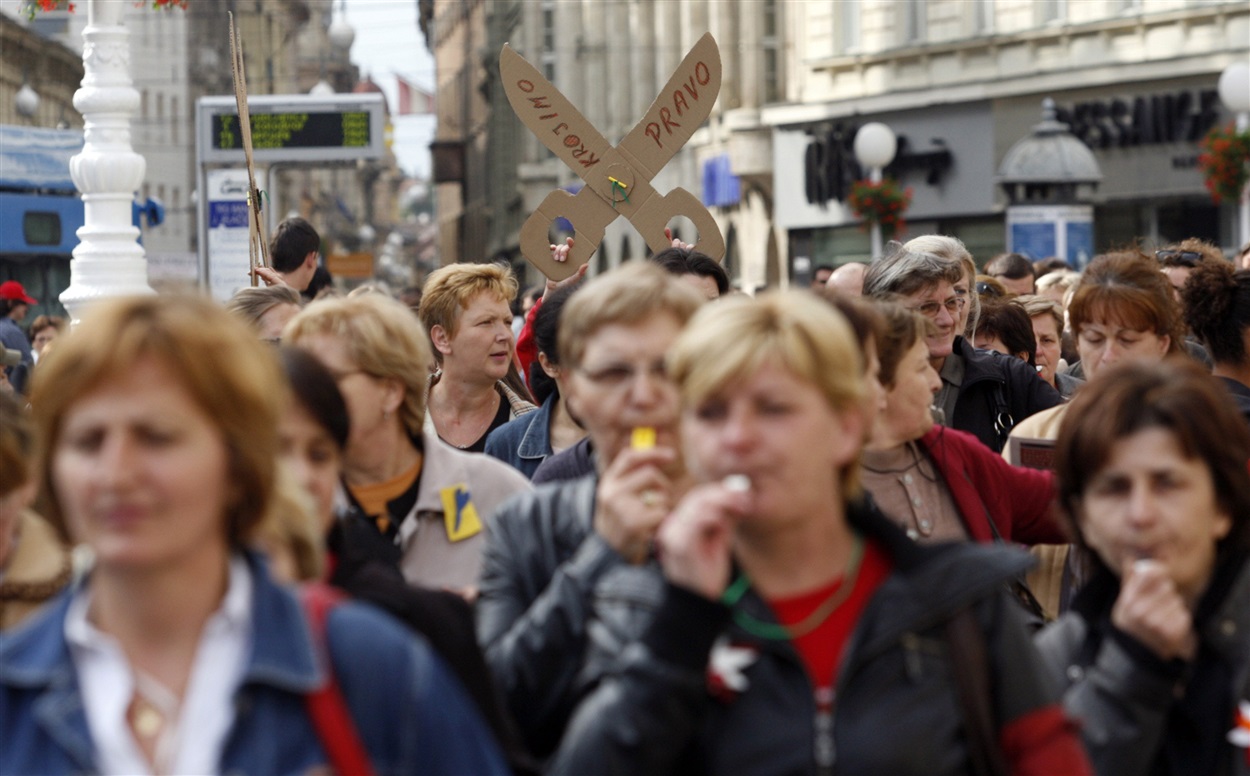
Traditional Women's Day night marches are also being held in several Croatian cities on Sunday evening. In Zagreb, the 10th such march will take place under the slogan "Women - the backbone of resistance", organised by the feminist collective fAKTIV.
International Women's Day commemorates a protest by textile workers in New York on 8 March 1857 demanding better working conditions and higher pay.