
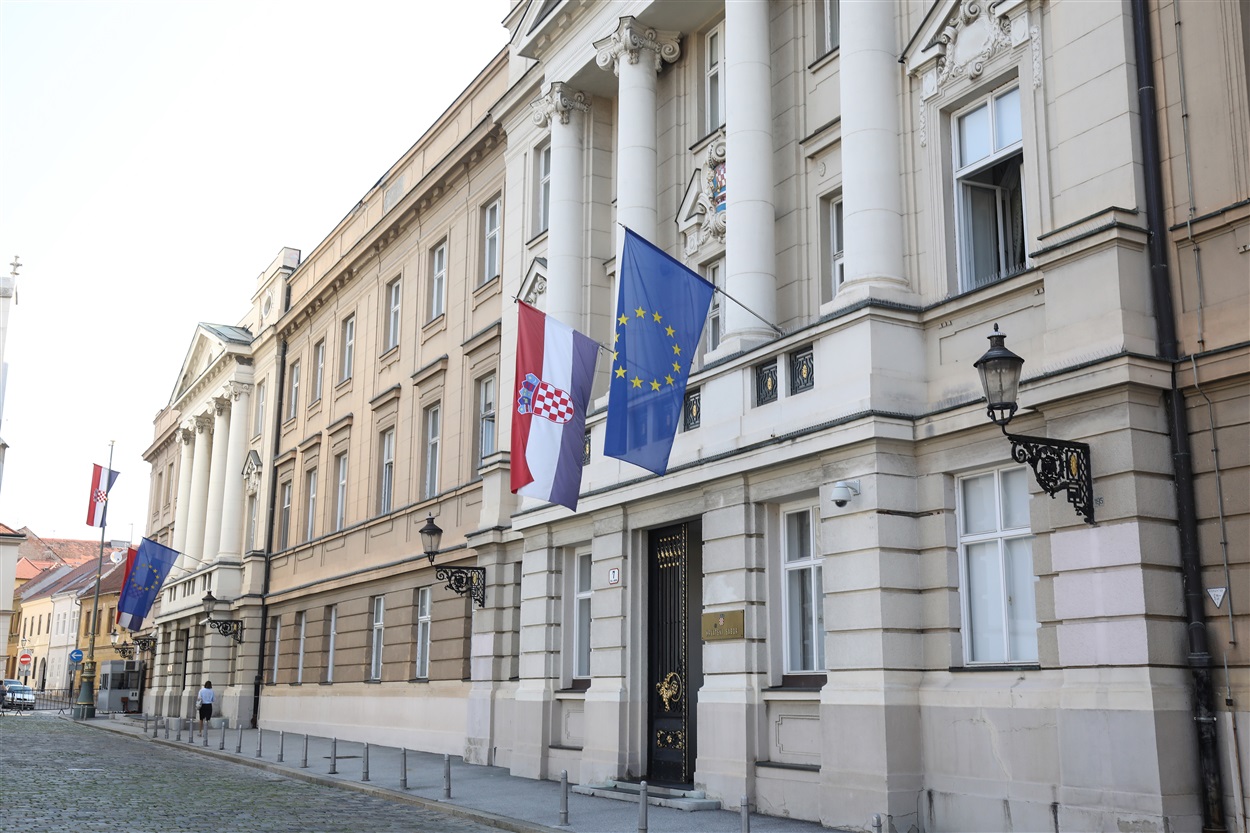
Zagreb - Thirty-five years ago, on 25 June 1991, members of the first convocation of the Croatian Parliament adopted a historic decision to initiate the process of disassociation from the other Yugoslav republics. Croatia marks Independence Day on Thursday in remembrance of that date.
The Constitutional Decision on the Sovereignty and Independence of the Republic of Croatia was preceded by a referendum held just five weeks earlier, on 19 May 1991, in which more than 92% of voters rejected the idea of Croatia remaining within Yugoslavia as a unified federal state.
Under the Constitutional Decision adopted by Parliament on 25 June 1991, consisting of only seven articles, the Republic of Croatia was declared a sovereign and independent state. The document states that Croatia thereby initiated the process of disassociation from the other republics and the Socialist Federal Republic of Yugoslavia (SFRY), as well as the process of seeking international recognition.
On the same day, Parliament also adopted the Declaration on the Proclamation of the Sovereign and Independent Republic of Croatia.
The ceremonial parliamentary session held on 25 June 1991 marked the culmination of proceedings that had begun on 18 June and continued uninterrupted for eight days. During the session, statehood acts were adopted on the basis of which Croatia was constituted as an independent and sovereign state.
Croatia’s first president, Franjo Tuđman, announced that day that Croatia was declaring itself an independent and sovereign state.
The circumstances in which Parliament adopted the historic decision on disassociation were extremely difficult. The rebellion of a part of the local Serb population, which began in August 1990, was gradually escalating into war with the support of the Yugoslav People’s Army (JNA). It had been preceded by the “Bloody Easter” incident at Plitvice Lakes, the clash in Borovo Selo and the killing of 12 Croatian police officers.
Attempts to resolve the crisis politically through meetings of the presidents of the Yugoslav republics also proved unsuccessful.
The European Community sought to halt the crisis through the Brijuni Declaration of 8 July 1991, under which Croatia and Slovenia accepted a three-month moratorium on the implementation of the decisions adopted on 25 June. After the moratorium expired, the Croatian Parliament, on 8 October 1991 – one day after JNA aircraft had rocketed the government headquarters in Zagreb – adopted a decision severing the “constitutional and legal ties on the basis of which Croatia, together with the other republics and provinces, had formed the former SFRY”.
From 2001 to 2019, 25 June was observed as Statehood Day and was a public holiday and non-working day. During the first decade of modern Croatia, however, the holiday was celebrated on 30 May, commemorating the constitution of the first democratically elected multi-party parliament in 1990, following decades of communist rule and a one-party system.
Amendments to the Public Holidays Act adopted in 2019 and entering into force in 2020 reinstated 30 May as Statehood Day, while 25 June was designated Independence Day. It ceased to be a public holiday and non-working day and became a commemorative observance and a regular working day.