
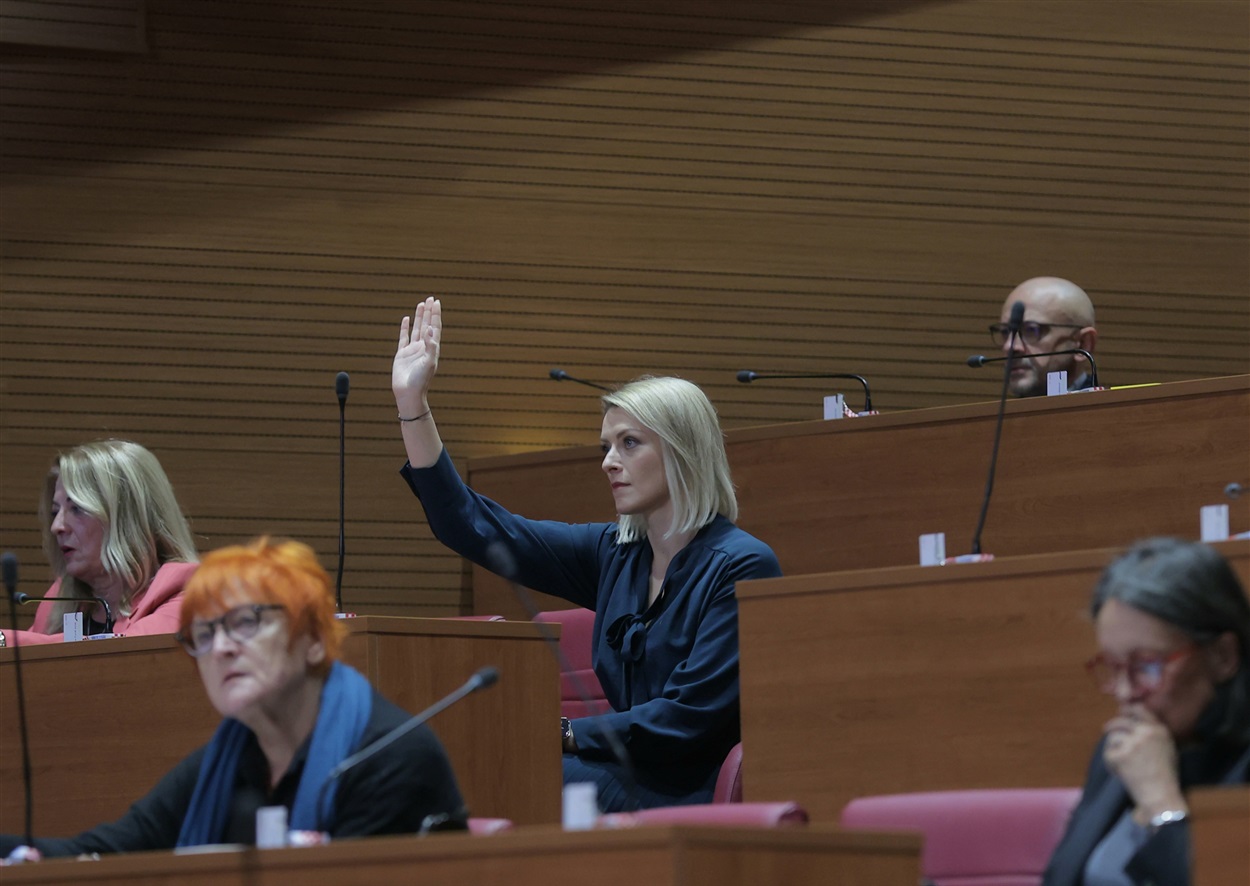
Zagreb - While opposition MPs raised numerous questions about the Affordable Housing Bill, deputies from the ruling Croatian Democratic Union (HDZ) described it as a "historic step", with Danica Baričević accusing the opposition of continuing its "political barrage".
"You are clearly doing a really good job," Baričević told Construction Minister Branko Bačić, who expressed confidence that the law, alongside other measures by his ministry and the government, would deliver results and help many citizens resolve their housing issues.
On the issue of renting, Bačić clarified that flats purchased at subsidised prices cannot be rented out; if this occurs, the buyer must return the funds and exit the affordable housing system.
He expressed optimism about implementing the National Housing Policy Plan over 60 months. "We need to activate 9,000 affordable rental units. In two months, we've activated 1,000, leaving 58 months to activate the remaining 8,000, so I think I can be optimistic," he said.
Bačić explained that flats in Zagreb or Osijek built under the law will cost up to 50% of the market price in the same area. Responding to Social Democratic Party MP Mišo Krstičević's concern that affordable housing might look drab, like former social housing, he stressed that buildings will be well designed and their façades will enhance the local area.
Construction of family homes and multi-storey buildings will provide the greatest access to affordable housing, using significant state and EU funds, Bačić told HDZ MP Josip Borić, who asked which of the eight planned measures is most attractive.
He also highlighted small flats for young people, ranging from 18-26 square metres, introduced for the first time in Croatia but already used in Western Europe. Existing units, such as those in Rijeka, cannot be enlarged due to constraints like parking; nearly 8,000 such units will be offered on the affordable rental market, available for short-term stays of four to six years, matching study periods.
Commenting on the size, Anka Mrak Taritaš (GLAS) ironically noted that, following Japan's example, flats could even be as small as five or six square metres.