
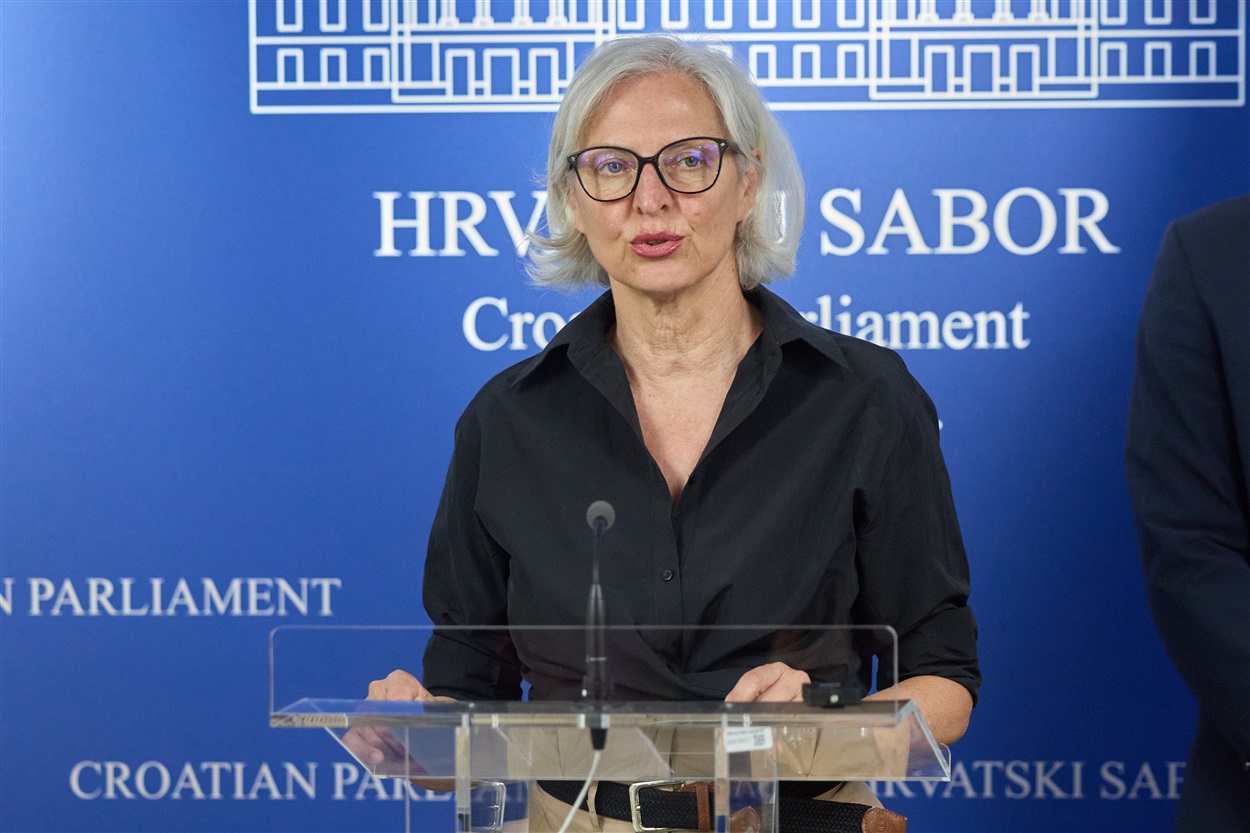
Zagreb - Dušica Radojčić (We Can!), chairwoman of parliament's Environment and Nature Conservation Committee, has called a committee session for 14 August in Gospić to discuss the illegal hazardous-waste dump in that city and the confirmed contamination of soil and groundwater.
"Residents of Gospić and the surrounding area, as well as the public across Croatia, must be given answers on the health risk assessment, the area potentially exposed, relevant pathways for the spread of contamination, planned health protection measures and the planned type and timetable of the cleanup," Radojčić said.
Environment and Green Transition Minister Marija Vučković and Health Minister Irena Hrstić have been invited to attend.
Radojčić has also proposed a public hearing following the committee session, with invitations extended to the two ministers, Environmental Protection and Energy Efficiency Fund director Luka Balen, Deputy Chief State Inspector Ivan Samac, Lika-Senj County Prefect Ernest Petry and Gospić Mayor Darko Milinović. If approved, the hearing would be held on 18 August.
She urged all committee members to attend the Gospić session.
"I publicly call on my colleagues from the HDZ and other committee members to attend so that we have a quorum and can hear from those responsible about the circumstances that led to this unprecedented contamination and serious threat to the health of people in Gospić and the Lika region," Radojčić said.
She called for the chain of responsibility to be established from the highest to the lowest level and for "maximum prison sentences" for those responsible for seriously endangering public health.
She also said taxpayers would ultimately bear the cost of the cleanup, estimated at around €125 million, due to state failures and corruption.
Citing findings by experts from the Faculty of Geotechnical Engineering, Radojčić said some waste samples exceeded the hazardous ecotoxicity threshold tenfold. Elevated concentrations of copper, zinc, lead and antimony were found, she added.
"This means there is a significant chemical burden on the soil and a potential for toxic effects, creating a long-term source of contamination," she said, adding that some of the changes were considered partly irreversible because they could be reduced through remediation but could not be completely eliminated without excavating and replacing the soil.