
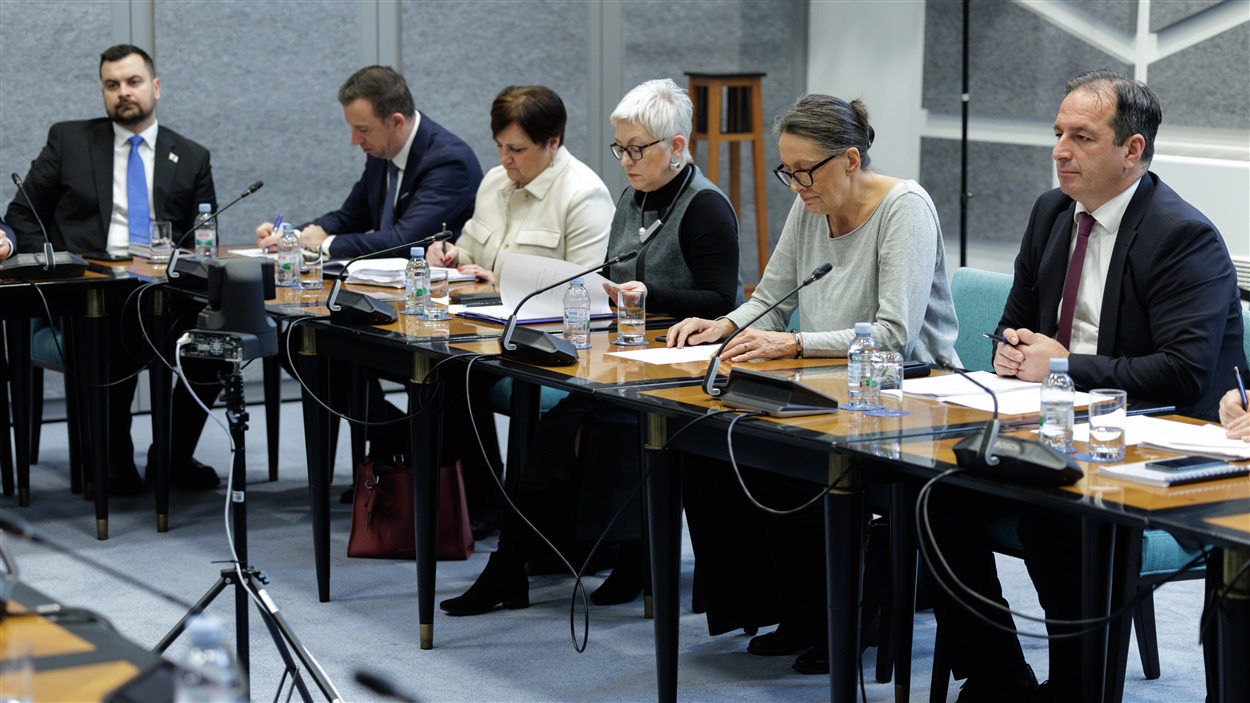
Zagreb - The Croatian Parliament's Committee on Information, Digitalisation and Media on Wednesday endorsed the final bill implementing the EU Transparency and Targeting of Political Advertising Regulation, and Hina's 2024 annual report.
The EU regulation, in force since 10 October 2025, requires political ads to be clearly labelled and to disclose who paid for them, which elections or referendums they relate to, and whether targeting or delivery techniques were used. Each member state designates authorities to enforce the rules.
In Croatia, the implementing law designates three authorities: the Electronic Media Agency (AEM) as the national contact point, the Personal Data Protection Agency (AZOP), and the Croatian Regulatory Authority for Network Industries (HAKOM). Violations carry fines of €13,270-€132,720 or 1–6% of annual revenue or budget, whichever is higher. AEM is the authorised enforcer for most breaches.
During committee discussions, deputy chair Urša Raukar-Gamulin highlighted the problem of large online platforms like Google and Meta banning political advertising, disadvantaging small or emerging parties and civil society organisations. She also noted that the State Electoral Commission (DIP) is not listed as a supervisory body in the bill and announced plans to propose an amendment.
State Secretary Sanjin Rukavina said DIP participated in drafting the bill and will issue guidance on reporting campaign and referendum funding.
Hina's 2024 annual report
Hina's 2024 annual report, presented by Steering Board Chair Majda Tafra-Vlahović, showed the agency is financially stable, technologically modernised and strategically relevant. Hina produced 231,000 pieces of content, including more than 68,000 news items, nearly 154,000 photographs and around 2,000 videos. Total revenue was €4.24 million, with a surplus of €118,000, and the agency contributed over €900,000 in VAT to the state budget.
Despite operating from a temporary location due to earthquake damage at its Marulić Square building, Hina maintained service continuity, continued investing in digital development, specialised services and European projects. Tafra-Vlahović said Hina is transforming from a traditional news agency into a modern public-interest information system, providing the informational backbone of Croatia's media space.
Raukar-Gamulin noted these achievements were made under former director Branka Gabrijela Vojvodić, who was "removed as director contrary to the European Media Freedom Act because the Hina Act was not amended and political influence was not removed." She argued that Croatia has yet to meet all requirements of the Act, particularly regarding the appointment of boards for public service media like HRT and Hina.