
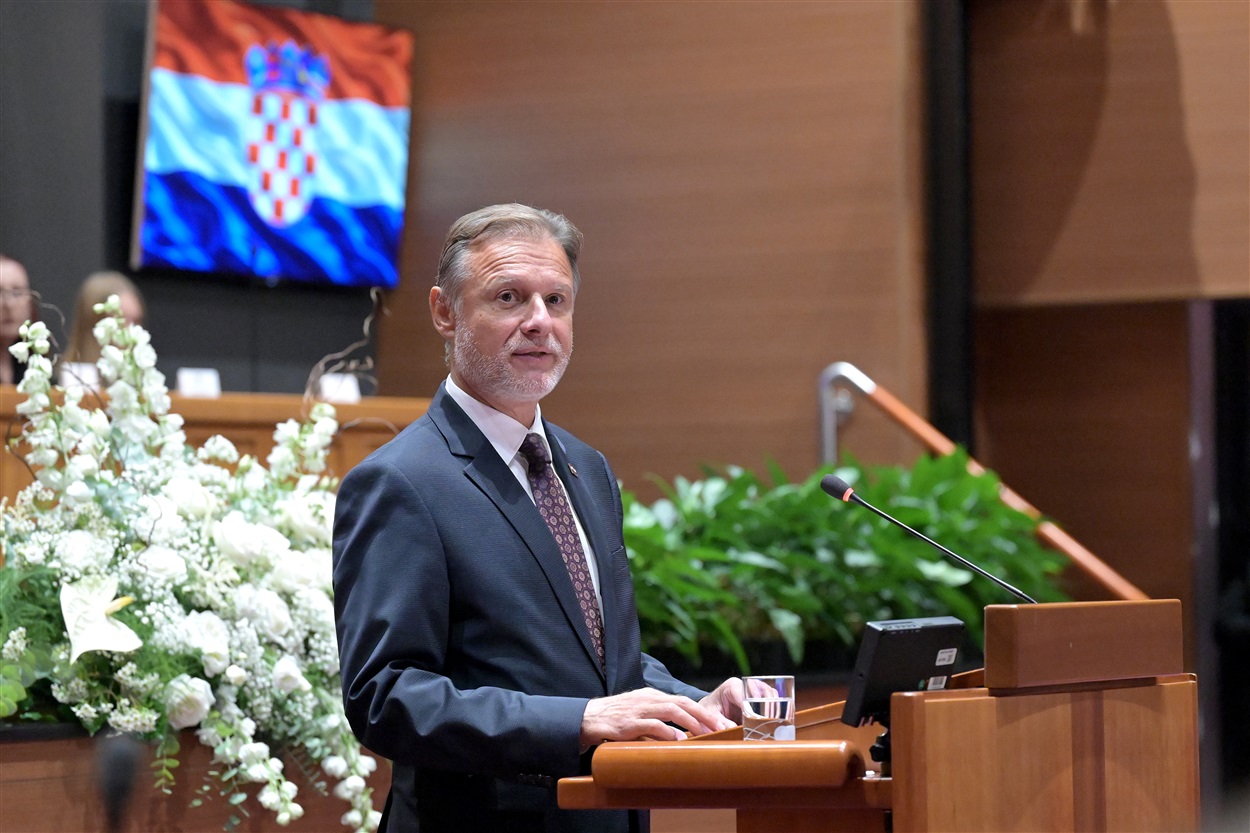
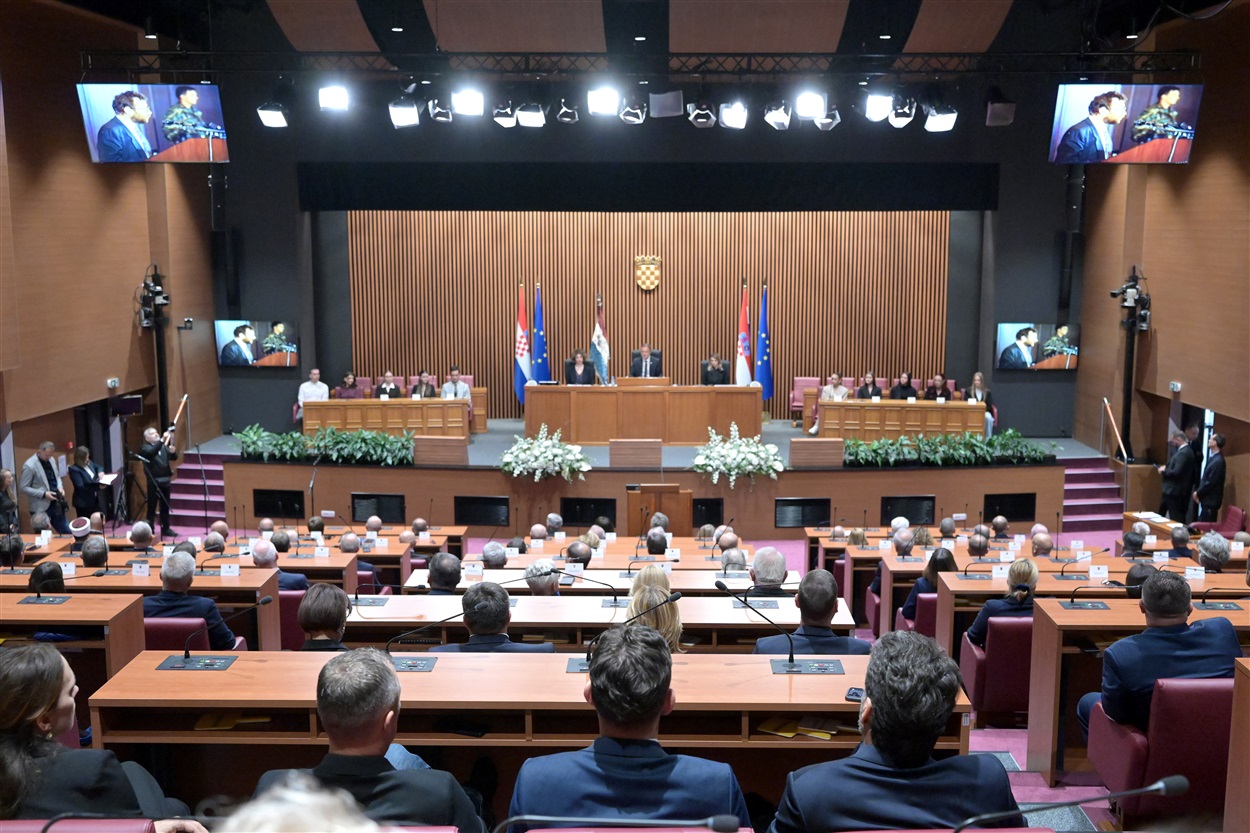
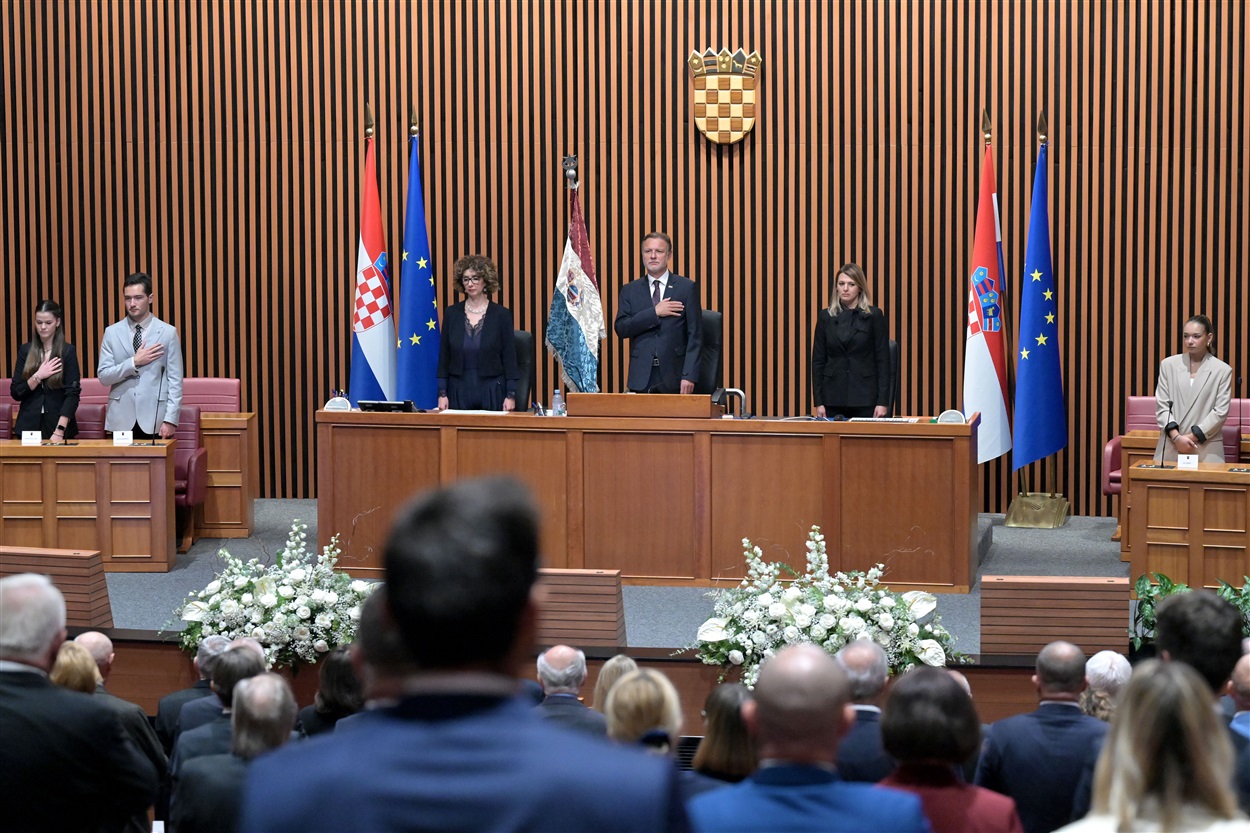
Zagreb - Croatia returned to the "civilised world to which it belongs" when it severed all ties with the former Yugoslavia 35 years ago, Parliament Speaker Gordan Jandroković said on Thursday at a special session marking Parliament Day.
"These were truly dramatic circumstances, and when things were at their most difficult, parliament did the only thing that was right and possible: it made a historic decision that was crucial to Croatia’s independence and statehood,” Jandroković said, recalling the events of 35 years ago.
A recording was shown of a speech by then Deputy Parliament Speaker Vladimir Šeks at the historic parliamentary session held on 8 October 1991 at the INA building in Šubićeva Street, when MPs unanimously voted to sever all ties with the Socialist Federal Republic of Yugoslavia (SFRY).
"Remembering that day, we remember the resolve of our predecessors, the MPs of the first parliament elected in the country's first democratic multi-party elections, people who at a historic turning point were prepared to take responsibility for the future of their nation," Jandroković said.
He recalled that the "Greater Serbian aggression, carefully directed from Belgrade", sought by force to prevent the creation of an independent Croatian state, break its defence and crush the will of the Croatian people expressed through democratic elections and a referendum.
Croatians responded with unprecedented unity and determined resistance, he said.
He stressed that Croatians must always express deep gratitude to the Homeland War veterans, those who gave their lives for the country, those who were wounded, and the families of veterans who bore the greatest burden and sacrifice.
Jandroković said that, had Croatia failed to win the Homeland War, it would today "be living in a country where our fate would be decided by those who are still not ashamed to glorify Ratko Mladić, a convicted leader and war criminal".
"Had the political leadership of the time, led by President Franjo Tuđman, failed to correctly read the historical circumstances, Croatia would have remained in Yugoslavia, "a communist, undemocratic, totalitarian state" that ruthlessly dealt with political opponents and lacked political freedoms, freedom of speech, media freedom and respect for fundamental human rights," he said.
Caution urged over 'evident political and security risks' from neighbourhood
Listing Croatia's strategic achievements as an independent state, from the peaceful reintegration of the Danube region to joining the EU, NATO and the Schengen area, Jandroković said the country had thereby returned to the "civilised world to which it belongs", a space of democracy, pluralism, political freedoms, a market economy, the rule of law, respect for human and minority rights, human dignity and media freedom.
The Sabor Speaker nevertheless urged caution over "evident political and security risks" in the neighbourhood.
"Croatia must speak clearly and openly about what is happening around us -- intensive rearmament, inflammatory propaganda and historical revisionism -- not because we are burdened by the past, but because it is extremely important to point out anything reminiscent of the fatal Belgrade logic of the 1990s. Similar ideas are still alive, and that requires caution," the parliament head said.
He said it was crucial to protect Croatia’s national interests "without compromise" and invest in defence and resilience.
"It is encouraging that throughout history we have repeatedly shown that we have been able to respond to different crises, and if we continue to approach them thoughtfully, comprehensively and responsibly, we will be better equipped to deal with future challenges," he added.
Jandroković said it was essential for Croatians to have higher wages, a better standard of living, more secure jobs and better public services. However, he said quality of life should not be measured solely by material indicators, but also by whether people were safer and freer, whether society was fairer, and whether the country was preserving its language, culture and heritage.
Jandroković said that, despite numerous achievements that had made Croatia stable, economically prosperous and internationally relevant, much remained to be done in legislative, institutional and broader socio-economic terms.
"We are aware that we must provide our children with the safest possible environment in which to grow up and ensure timely protection for the most vulnerable. We must prevent violence against women more effectively and be there when it nevertheless occurs. We must also decisively tackle reckless criminal attacks on our environment, water and air, as well as acts of corruption by individuals and groups," he said, calling for the strongest possible support for state institutions as they continue to address these issues.
Together with the executive branch, elected representatives of citizens have a leading role to play because responsibility for the public good lies at the heart of politics, he told MPs.
"We should not see political differences as an insurmountable problem, but as an integral part of democracy. I call on you to make this a parliament in which we show greater respect for one another. Even when we completely disagree, let the interests of our country always come before particular political interests," he said.
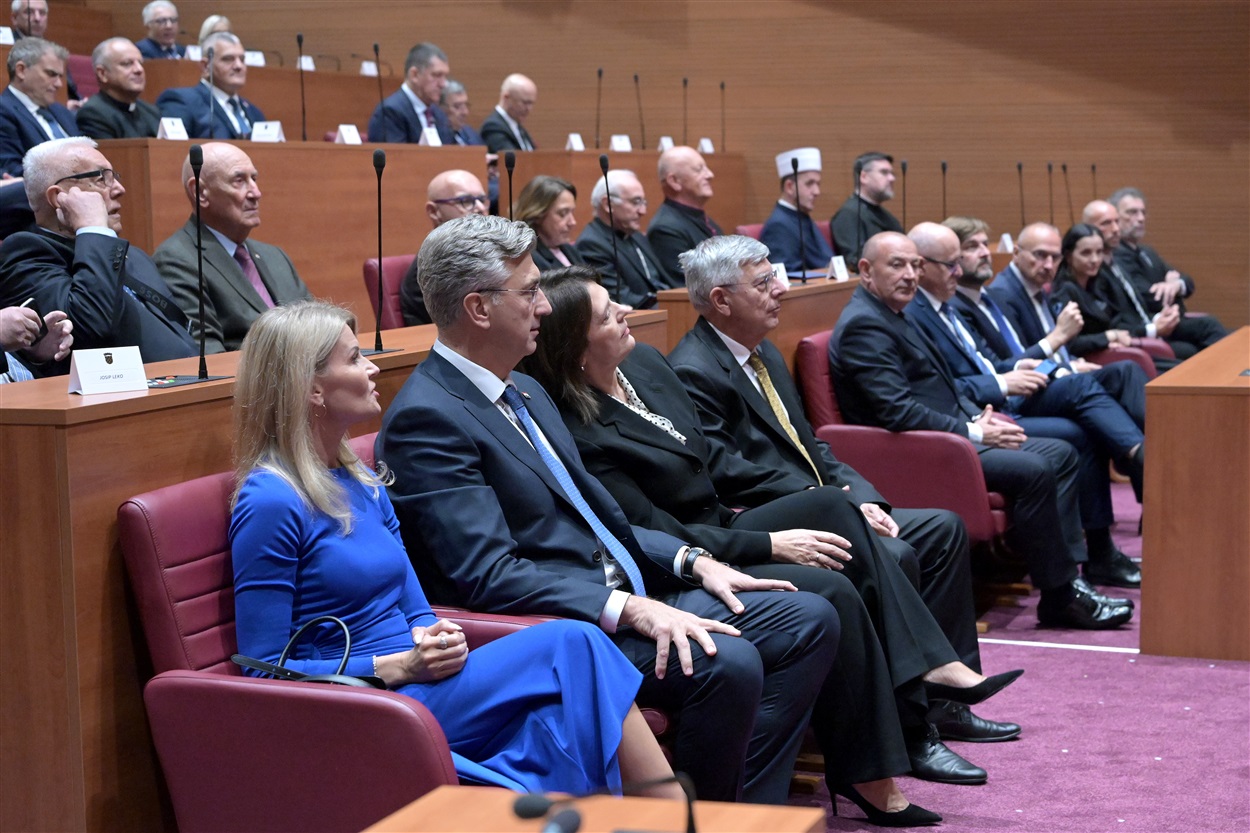
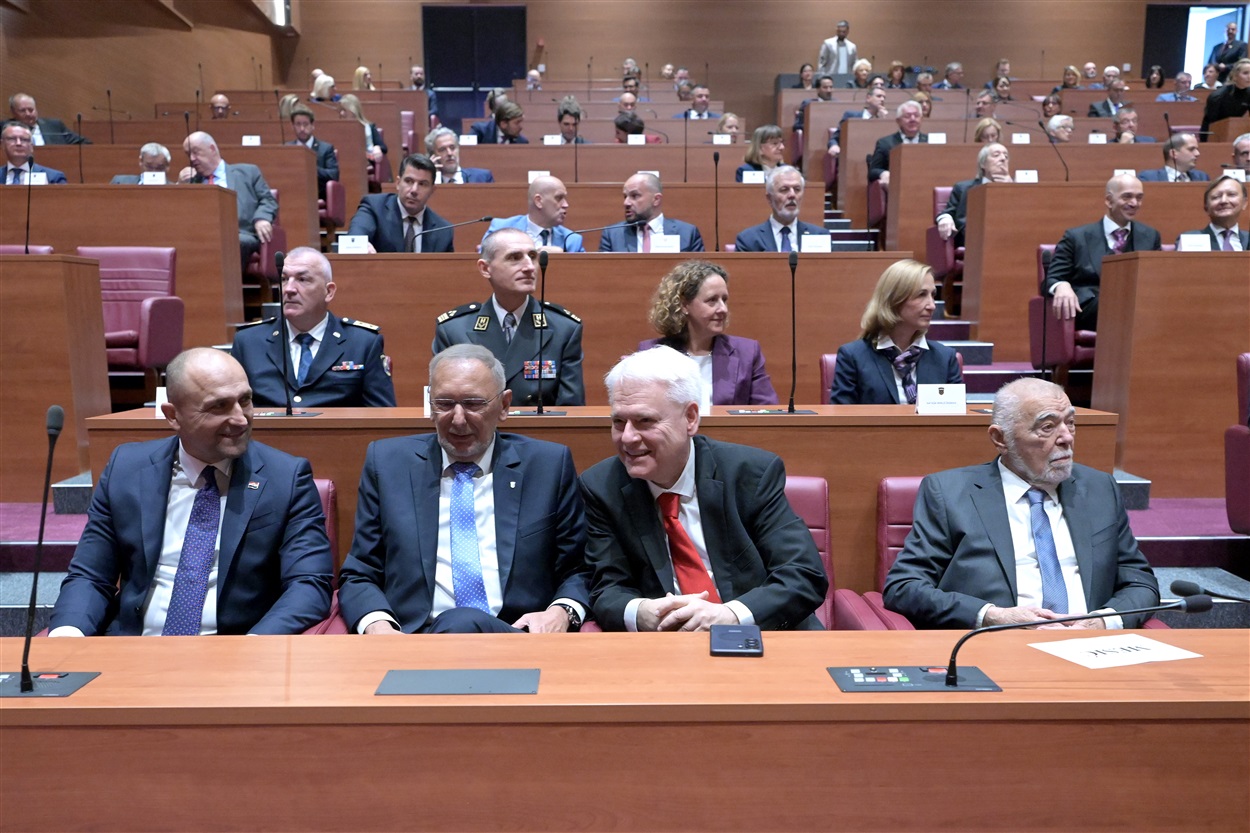
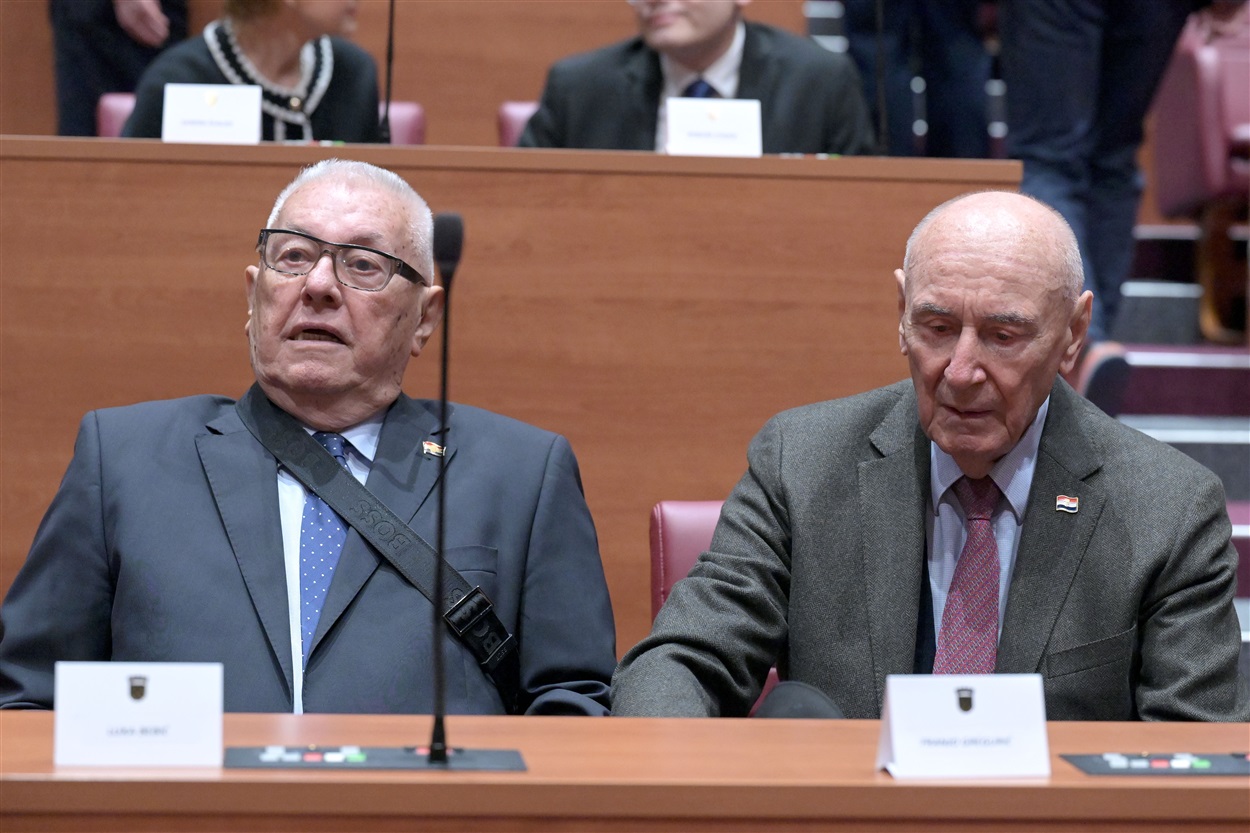
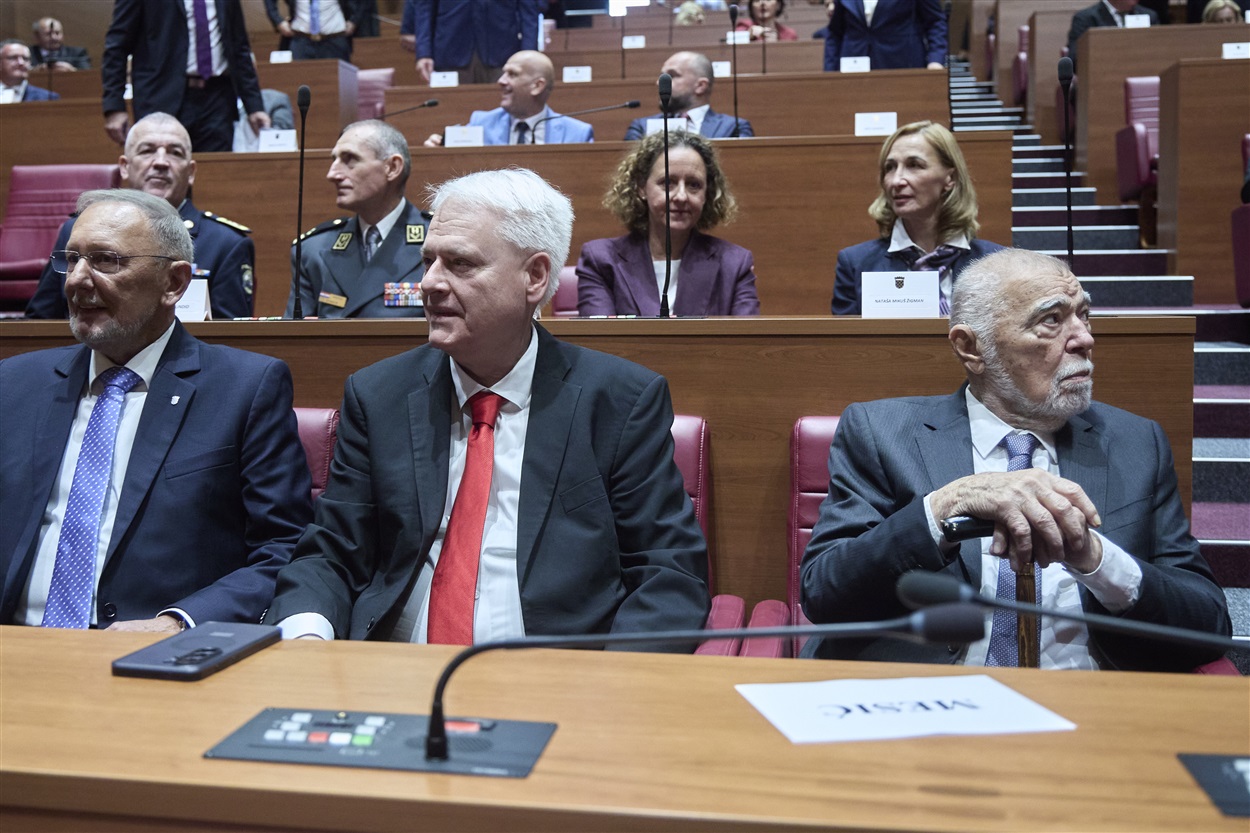
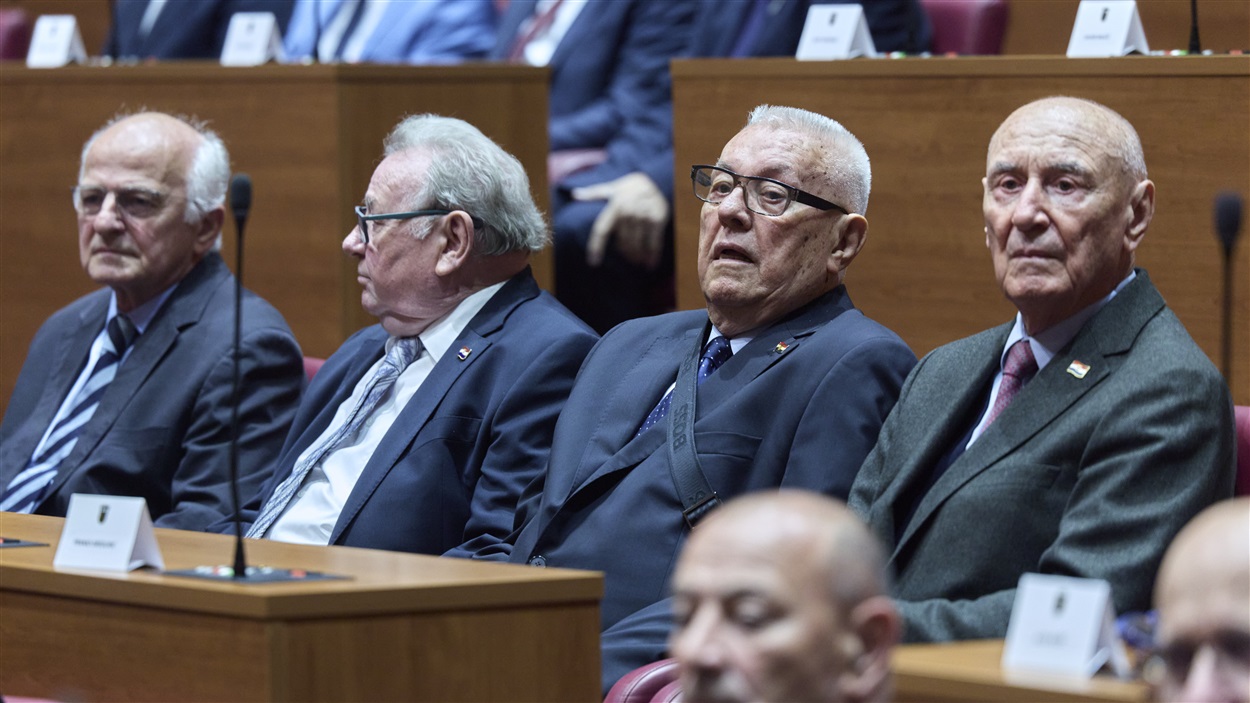
Prime Minister Andrej Plenković, cabinet ministers and former politicians who held office in the 1990s also attended the special session.