
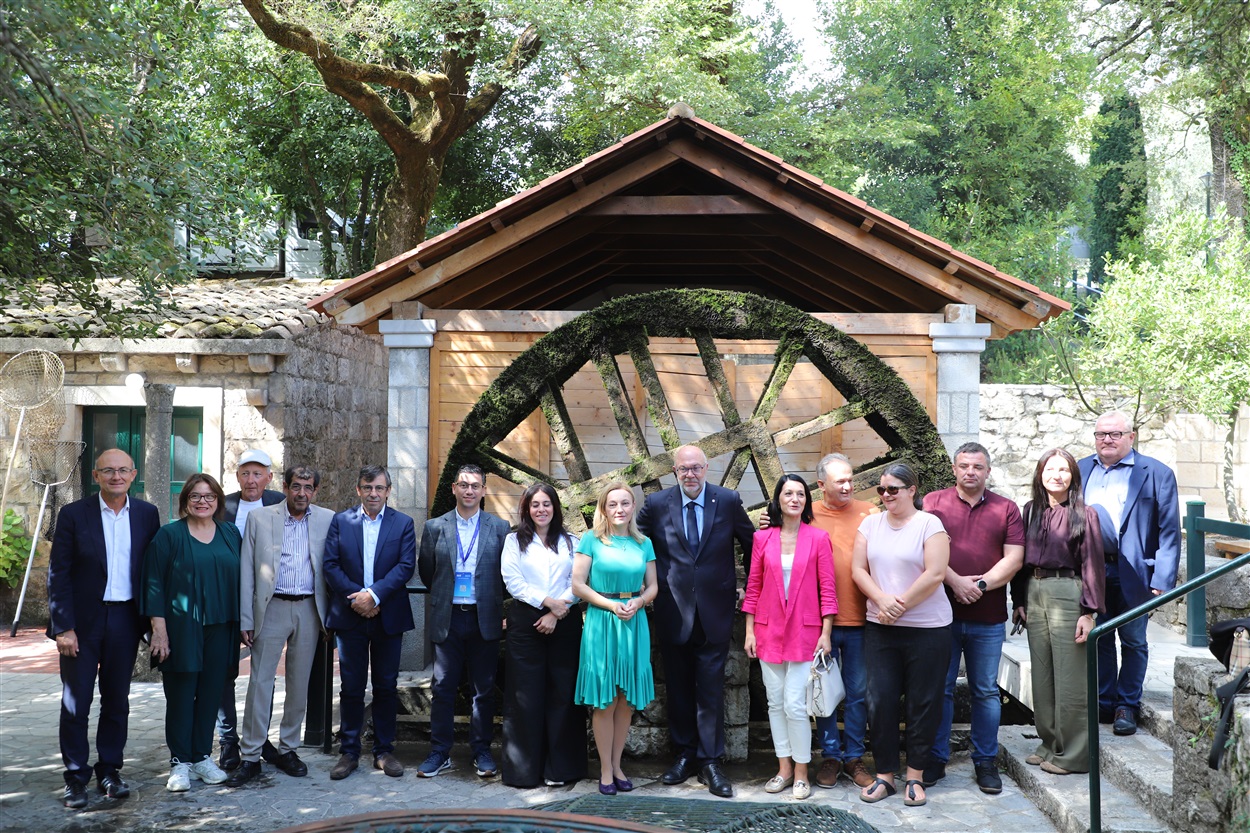
Konavle – Following the successful Interparliamentary Conference “From Field to Sea – A Common Vision for Food Security and the Strategic Autonomy of the EU”, organised by the Agriculture Committee of the Croatian Parliament in Dubrovnik, delegations from the MED9 Member States were today presented with examples of good practice in linking agriculture, tourism, local production and rural development.
As part of the study visit to Konavle, parliamentarians visited local producers and entrepreneurs and learned about models demonstrating how short supply chains, agrotourism and the use of European funds can contribute to the sustainability of agricultural holdings and the preservation of rural communities.
Presenting Crvik Winery, Petar Crvik noted that his family has been engaged in viticulture and winemaking since the 18th century. Today, the winery produces around 30,000 bottles of five varieties of wine annually and is one of the largest wineries in the Konavle area. He placed particular emphasis on the importance of developing agrotourism, which enables them to market their wine directly and provides an additional incentive to continue and develop their business.
Ivo Mujo, President of the Konavle Agrotourism Association, stressed that the development of agrotourism had contributed significantly to generational renewal in the area. He explained that wine, olive oil, dried figs and rakija (schnapps), four signature products of Konavle, are closely linked to the tourist offer through short supply chains.
“Our family farms are average between 10 and 15 hectares in size and can hardly be competitive on the wider market. That is why linking agriculture and tourism is one of the key solutions for their survival,” Mujo stressed.
The participants also visited Konavoski Dvori, where the owner Nikša Ivaniš presented investments in the renovation and sustainability of the restaurant. A total of EUR 350,000 in European funding was also used for the renovation, further directing the business towards energy efficiency and sustainability. The restaurant is therefore considered the first “green restaurant” in Croatia. Most of the products on the menu are sourced from local producers, further strengthening the local value chain.
Konavoski Dvori is located along the Ljuta River, one of the cleanest rivers in Croatia, in an area also known for its extensive laurel groves, further contributing to the distinctive natural and gastronomic offering of Konavle.
On behalf of the Prefect of Dubrovnik-Neretva County, Blaž Pezo, Ivana Radić, Head of Agriculture and Rural Development Administrative Department of Dubrovnik–Neretva County welcomed the participants stressing that although the county is best known for tourism, it is also strongly shaped by a tradition of agriculture and rural development.
“Behind the tourism image of our county lies a strong tradition of agriculture and care for rural areas, from Konavle, through the Neretva Valley and Pelješac peninsula, to our islands,” Radić said.
Following the discussions held at the MED9 conference, the study visit provided an opportunity to demonstrate in practice how linking agriculture, tourism, local production, short supply chains and European funds can strengthen rural areas, help keep people in rural and island communities, and increase the resilience of local communities, said Marijana Petir, Chair of the Agriculture Committee of the Croatian Parliament.